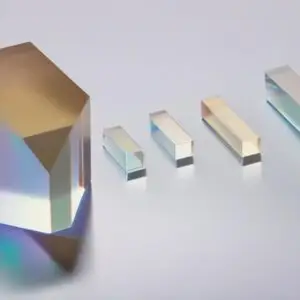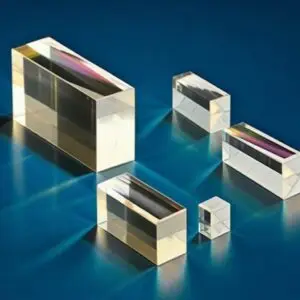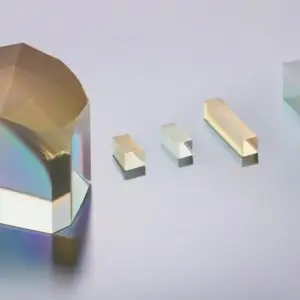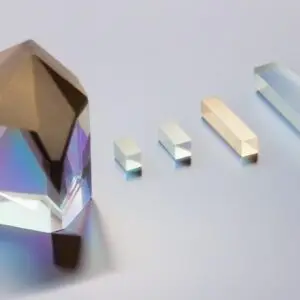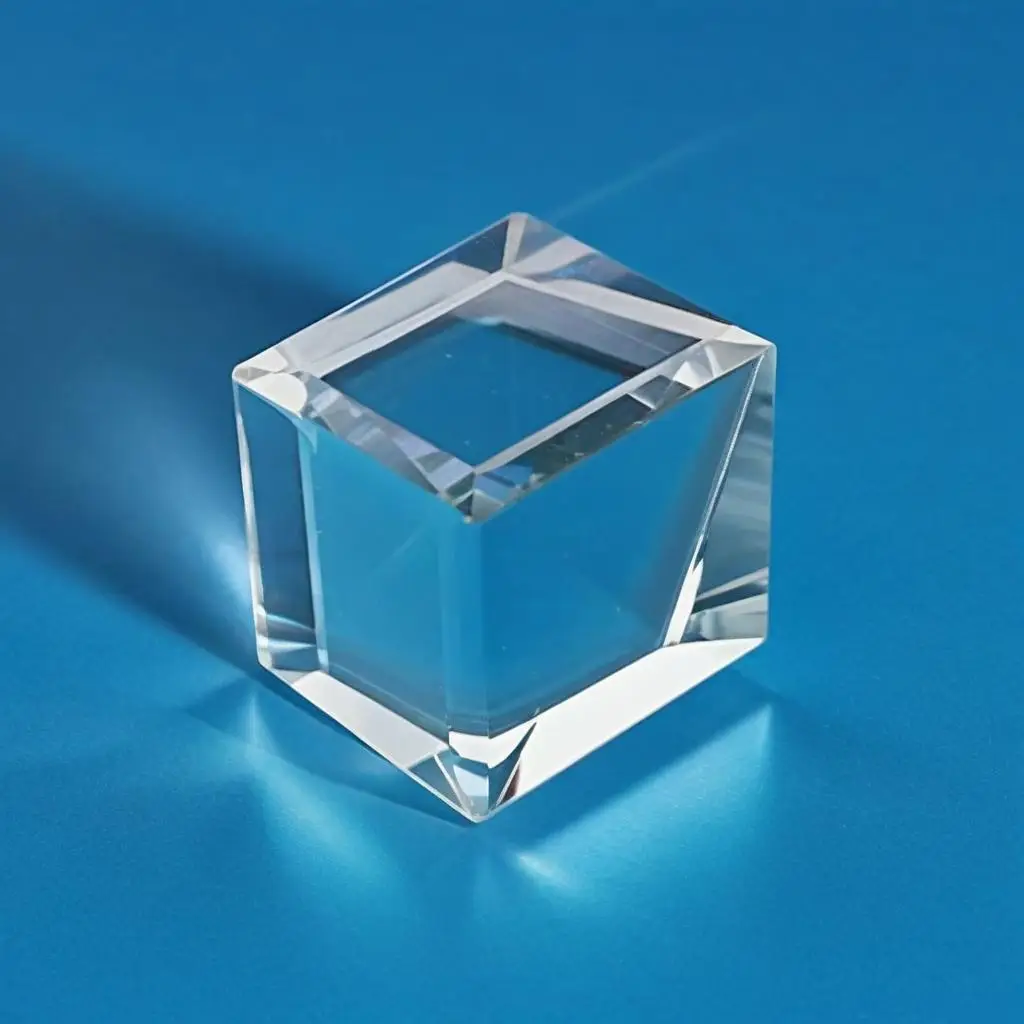
POC-OC-122439-Er:Cr:YSGG Crystal

  • Low Laser Threshold: The lowest threshold among common Erbium-doped crystals.
  • High Slope Efficiency: Provides exceptional energy conversion efficiency.
  • Wide Pumping Range: Supports CW, free-running, and Q-switched operation.
  • High Optical Quality: Exhibits stable chemical properties and long fluorescence lifetime.
  • Intrinsic Crystal Disorder: Enables broader pump linewidths and excellent tunability.

Customizable Components Available for This Material to Meet Your Specific Needs!

General Description

The Er:Cr:YSGG (Erbium and Chromium-doped Yttrium Scandium Gallium Garnet) crystal is a high-performance laser crystal known for generating 2800 nm light in a critical water absorption band. It boasts high conversion efficiency, stable chemical durability, and a long fluorescence lifetime, making it one of the most promising laser media. The crystal operates efficiently under CW or pulsed laser conditions, making it versatile for dental lasers, environmental sensing, optical communication, and military applications. Due to its intrinsic structural properties, Er:Cr:YSGG Crystal  has excellent tenability, increasing its appeal across diverse scientific and industrial domains.

General Applications and Examples

Er:Cr:YSGG is extensively used in several advanced applications due to its high energy efficiency and versatility:

  • Medical Lasers: Used in dental surgeries and hard tissue ablation. Its absorption peak aligns perfectly with water content in biological tissues, ensuring high precision and minimal collateral damage.
  • Environmental Sensing: Suitable for remote water vapor sensing and environmental research, leveraging its 2800 nm emission for high absorption efficiency in water molecules.
  • Optical Communications: Facilitates optical amplifications and secure wavelength transmission in specialized communication systems.
  • Military Applications: Utilized in defense systems for remote target sensing, range finding, and LIDAR technologies due to its high power output and robust design.
  • Scientific Research: Applied in spectroscopy and material analysis for studying molecular structures, leveraging its stable energy efficiency and precise wavelength range.

Chemical and Structural Properties

PropertySpecification
Crystal StructureCubic, Garnet
Chemical FormulaY3Sc2-xGaxGa3O12
Lattice Parameter12.42 Å
Dopant ConcentrationCr: 0.5 × 10^20 (atoms/cm³), Er: 4 × 10^21 (atoms/cm³)
Growth MethodCzochralski
Density5.67 g/cm³
Refractive Index1.92 at 1000 nm
Thermal Expansion Coefficient8.1 × 10^-6 K⁻¹
Thermal Conductivity8 W/m/K
Mohs Hardness8 Mohs
Thermo-optical Factor12.3 × 10^-6 K⁻¹
Emission Cross-section5.2 × 10^-20 cm²
Fluorescence Lifetime1400 µs

Optical, Laser and Nonlinear Optical Properties

ParameterValue
Laser Wavelength2800 nm
Peak Absorption Cross-section5.2 × 10^-20 cm²
Fluorescence Lifetime1400 µs
Thermo-optical Coefficient12.3 × 10^-6 K⁻¹
Emission LinewidthBroad and tunable
Pump SourceDiode-pumped via Cr or Er bands
Mode of OperationCW, free-running, Q-switched

Standard Fabrication Specifications

SpecificationValue
Rod SizeDiameter: 3–6 mm, Length: 50–120 mm
Surface Quality10/5 per MIL-PRF-13830B
Flatness< λ/8 @ 633 nm
Parallelism<20 arc sec
Perpendicularity<15 arc min
Chamfer<0.2 mm × 45°
Coating OptionsAR-coated or HR-coated upon request

Spectrum Transmission Curve

The absorption spectrum for Er:Cr:YSGG demonstrates strong peaks around 2800 nm, aligning well with water molecule absorption. Its broad tunability and strong fluorescence peaks enhance its utility in high-precision applications
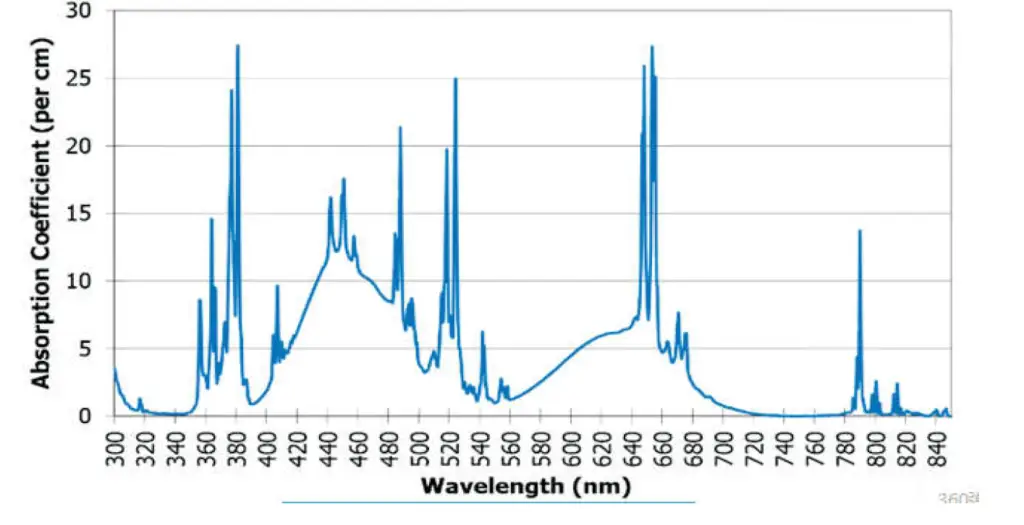
POC-Er Cr YSGG Crystal Spectrum Absorption Curve

Coating Specification

  • AR Coating: Designed for 2800 nm with <0.2% reflectivity.
  • HR Coating: Custom coatings available upon request for specific applications.
  • Adhesion Test: Compliant with MIL-C-675C military standards, an adhesion test involved applying a tape that meets LT-90 specifications onto the lens film layer. The tape was affixed fully and then removed vertically. This procedure was performed three times, resulting in no blistering or peeling.
  • Temperature Test: In line with MIL-C-675C specifications, test pieces were subjected to temperatures of -62±1℃ and 71±1℃. After maintaining them at room temperature (16℃~32℃) for two hours, the adhesion test was repeated, confirming no film detachment.
  • Abrasion Resistance Test: Conforming to MIL-C-675C and CCC-C-440 standards, the abrasion resistance test involved a gauze tester applying a minimum force of 1.0 lbs (0.45 kg) to the film. This was repeated 25 times with gauze widths of 1/4 inch (6.4mm) and 3/8 inch (9.5mm), ensuring no damage occurred to the film surface.
  • Humidity Test: Under MIL-C-675C criteria, the test piece was placed in a controlled temperature and humidity chamber set to 49 ±2℃ and 95%~100% humidity for 24 hours. The film remained intact, with no peeling, scratches, or other defects.
  • Solvent and Cleaning Testing: Following MIL-C-675C specifications, test pieces were exposed to room temperature conditions (16℃~32℃) and tested with acetone and alcohol for at least 10 minutes each. After air drying and subsequent cleaning with a cotton cloth soaked in alcohol, the film surface showed no signs of peeling or scratches.
  • Salt Spray Test: After 100 hours in a 35°C environment with a 5% saltwater concentration, the film showed no signs of damage.
DimensionsLengthEnd FacesDopingCoatingPrice (USD)
3 × 3 mm10 mmBrewster-angle cutCr, Er dopedUncoated$450
4 × 4 mm20 mmRight-angle cutCr, Er dopedAR-coated @2800 nm$500
5 × 5 mm30 mmBrewster-angle cutCr, Er dopedHR-coated$600
CustomizationAs neededAs neededAs requestedAs requestedRequest Quote
//body code