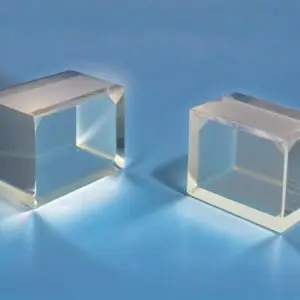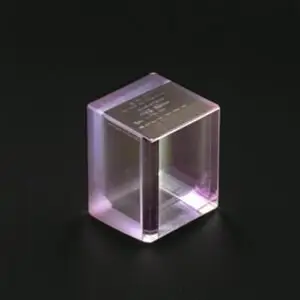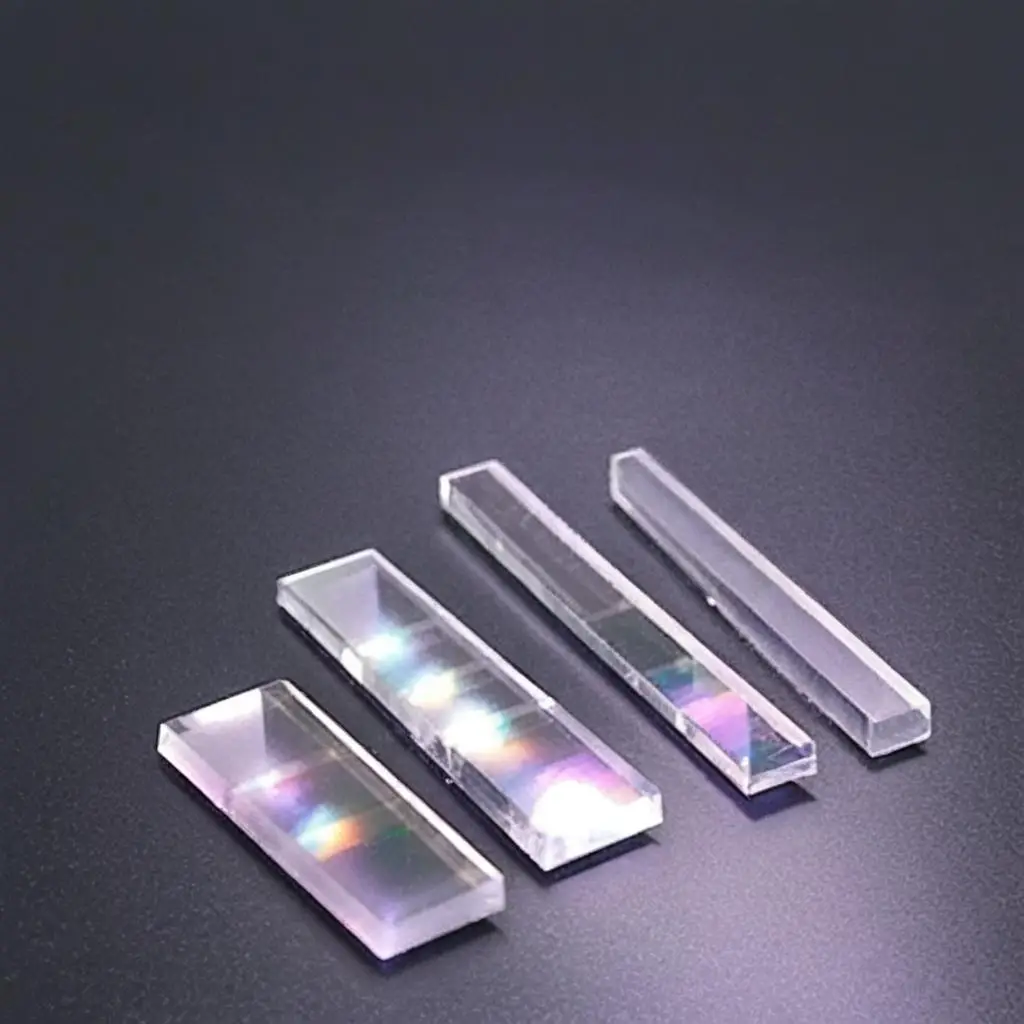
POC-OC-122447-Er:YSGG Crystal

  • Efficient laser material emitting at 2.79 μm for advanced applications.
  • High slope efficiency and broad absorption band optimized for 808 nm pumping.
  • Excellent mechanical strength and thermal conductivity for enhanced stability.
  • Low thermal lensing effect reduces heat generation during high-power operation.
  • Custom doping levels and AR coatings available for tailored solutions.

Customizable Components Available for This Material to Meet Your Specific Needs!

General Description

Er:YSGG (Erbium-doped Yttrium Scandium Gallium Garnet) crystal is an exceptional mid-infrared laser material with emission at 2.79 μm. This wavelength is highly absorbed by water molecules, making it suitable for medical, industrial, and environmental applications. Its superior mechanical and thermal properties enable reliable high-power laser operation with minimal thermal stress.

The crystal features a broad absorption band, which makes it highly compatible with 808 nm diode pumping and flashlamp systems. Its high emission efficiency and long fluorescence lifetime ensure consistent laser performance. The material is mechanically robust, has a high damage threshold, and can be manufactured to precise tolerances, making it versatile for both CW and pulsed laser operations.

General Application and Examples

Er:YSGG crystals are widely utilized in the following fields:

  1. Medical Applications:
    • Laser Dentistry: The 2.79 μm wavelength aligns with the water absorption peak, allowing precise cutting and ablation of hard and soft tissues with minimal thermal damage.
    • Surgery: Er:YSGG Crystal  lasers are employed in skin resurfacing, ophthalmology, and lithotripsy due to their precise and efficient tissue removal capabilities.
    • Dermatology: Effective for treating scars, wrinkles, and other skin conditions with minimal invasiveness.
  2. Industrial Applications:
    • Used in precision cutting, engraving, and material processing, especially where water or organic components play a role.
    • Ideal for laser drilling and surface marking of delicate materials.
  3. Environmental Monitoring:
    • Detection and measurement of water vapor and other molecules in the atmosphere for climate studies and industrial monitoring.
  4. Military and Defense:
    • Mid-IR lasers based on Er:YSGG Crystal  are ideal for rangefinding, optical communications, and secure target designation systems.
  5. Research and Development:
    • Utilized in advanced spectroscopy, mid-infrared imaging, and optical parametric oscillators.

Chemical and Structural Properties

Property Value
Crystal Formula Er:YSGG (Y3Sc2Ga3O12)
Crystal Structure Cubic
Lattice Parameter 12.42 Å
Density 5.67 g/cm³
Melting Point ~1900 °C
Mohs Hardness 8
Thermal Conductivity 8 W/m·K
Thermal Expansion 8.1 × 10^-6/K
Doping Levels Er: 0.5–1 at.%

Optical, Laser and Nonlinear Optical Properties

Property Value
Emission Wavelength 2.79 μm
Pump Bands 600–800 nm
Absorption Peaks 808 nm, 980 nm
Fluorescence Lifetime 1400 μs
Emission Cross-Section 5.2 × 10^-20 cm²
Laser Transition 4I11/2 → 4I13/2
Refractive Index 1.92 at 1000 nm

Standard Fabrication Specifications

Parameter Specification
Orientation <111>
Diameter Tolerance +0/-0.05 mm
Length Tolerance ±0.5 mm
Surface Flatness λ/10 @ 632 nm
Parallelism <10 arc sec
Perpendicularity <5 arc min
Surface Quality (Scratch/Dig) 10-5
Clear Aperture >90%
Chamfer 0.1 mm x 45°

Spectrum Transmission Curve

The Er:YSGG crystal demonstrates high transmission efficiency in the 2.79 μm range, ideal for precision laser applications. Detailed transmission spectra can be provided upon request.

Coating Specification

  • AR Coating: Anti-reflective coatings for 2.79 μm wavelength, optimized for high durability.
  • Reflectivity: R < 0.2% @ 2.79 μm.
  • Damage Threshold: Coatings are designed to withstand high-energy pulsed and CW operations.
  • Adhesion Test: Compliant with MIL-C-675C military standards, an adhesion test involved applying a tape that meets LT-90 specifications onto the lens film layer. The tape was affixed fully and then removed vertically. This procedure was performed three times, resulting in no blistering or peeling.
  • Temperature Test: In line with MIL-C-675C specifications, test pieces were subjected to temperatures of -62±1℃ and 71±1℃. After maintaining them at room temperature (16℃~32℃) for two hours, the adhesion test was repeated, confirming no film detachment.
  • Abrasion Resistance Test: Conforming to MIL-C-675C and CCC-C-440 standards, the abrasion resistance test involved a gauze tester applying a minimum force of 1.0 lbs (0.45 kg) to the film. This was repeated 25 times with gauze widths of 1/4 inch (6.4mm) and 3/8 inch (9.5mm), ensuring no damage occurred to the film surface.
  • Humidity Test: Under MIL-C-675C criteria, the test piece was placed in a controlled temperature and humidity chamber set to 49 ±2℃ and 95%~100% humidity for 24 hours. The film remained intact, with no peeling, scratches, or other defects.
  • Solvent and Cleaning Testing: Following MIL-C-675C specifications, test pieces were exposed to room temperature conditions (16℃~32℃) and tested with acetone and alcohol for at least 10 minutes each. After air drying and subsequent cleaning with a cotton cloth soaked in alcohol, the film surface showed no signs of peeling or scratches.
  • Salt Spray Test: After 100 hours in a 35°C environment with a 5% saltwater concentration, the film showed no signs of damage.
Dimension Length End Faces Coating Price (USD)
3 x 3 mm 10 mm Flat/Flat AR @ 2.79 μm Request
5 x 5 mm 15 mm Brewster AR/HR @ 2.79 μm Request
8 x 8 mm 20 mm Flat/Flat Uncoated Request
Custom Custom Custom Custom Request
//body code