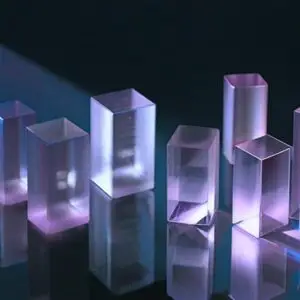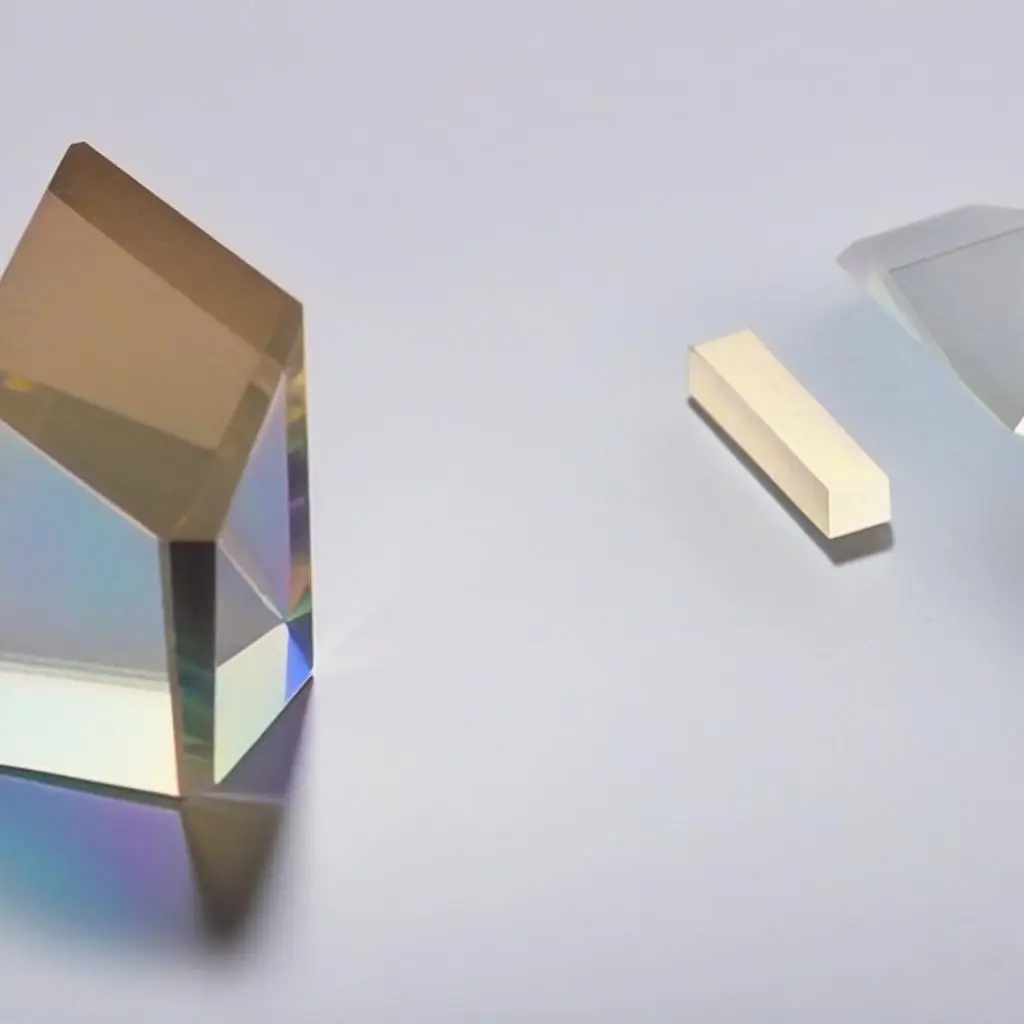
POC-OC-122466-YVO4 Crystal

  • High transmittance range from 0.4 to 5 µm.
  • Large birefringence and excellent optical properties for polarizing components.
  • Superior temperature stability and mechanical strength.
  • Positive uniaxial crystal with low deliquescence.
  • Suitable substitute for Calcite (CaCO₃) and Rutile (TiO₂) in optical isolators and circulators.

Customizable Components Available for This Material to Meet Your Specific Needs!

General Description

Yttrium Orthovanadate (YVO₄) is a positive uniaxial crystal grown using the Czochralski method. Known for its exceptional thermal stability and mechanical durability, YVO₄ crystals are widely used in optical applications requiring high transmittance and birefringence. The crystal exhibits low hygroscopicity and is highly resistant to deliquescence, making it suitable for long-term use in humid environments. With its optical transparency extending from the visible to mid-infrared spectrum (0.4–5 µm), YVO4 Crystal is an excellent synthetic alternative to naturally occurring birefringent materials like Calcite and Rutile. Its robust optical properties, combined with its stability, make it ideal for manufacturing optical isolators, beam displacers, and circulators.

General Applications and Examples

YVO₄ crystals find extensive applications in:

  1. Fiber-optic isolators and circulators:
    • Used to manage optical signals in fiber-optic communication systems by reducing signal interference and back reflections.
  2. Beam displacers:
    • Employed in optical systems to achieve polarization splitting for high-precision laser applications.
  3. Interleavers:
    • Common in wavelength-division multiplexing (WDM) systems for improving spectral resolution.
  4. Polarizing optics:
    • Ideal for polarizing components due to its high birefringence and stability across a wide wavelength range.
  5. Laser systems:
    • Integrated into laser cavities for wavelength stabilization and polarization control.
  6. Optical instrumentation:
    • YVO4 Crystal Utilized in high-performance metrology and scientific instrumentation requiring precision optical components.

Examples include optical circulators in telecommunication systems, beam displacers for spectroscopy, and polarizers in advanced imaging systems.

Chemical and Structural Properties

ParameterValue
Crystal structureZircon tetragonal, space group D₄h
Lattice constantsa = b = 7.12 Å, c = 6.29 Å
Density4.22 g/cm³
Mohs hardness5 (glass-like)
Thermal expansion coefficientαₐ = 4.43 × 10⁻⁶/K, αᶜ = 11.37 × 10⁻⁶/K
Thermal conductivitya-axis: 5.23 W/m·K, c-axis: 5.10 W/m·K
Refractive indicesnₑ = 2.1554 (at 1550 nm), nₒ = 1.9447
Birefringence (nₑ – nₒ)0.2039 (at 1550 nm)
Transparency range0.4 to 5 µm
Hygroscopic susceptibilityNon-hygroscopic

Optical Properties

ParameterValue
Refractive indicesnₑ = 2.1554 (at 1550 nm), nₒ = 1.9447
Birefringence (nₑ – nₒ)0.2039 (at 1550 nm)
Walk-off angle at 45°5.69°
Transparency range0.4 to 5 µm
Sellmeier equationn² = A + (B/(λ²-C)), parameters provided

Standard Fabrication Specifications

SpecificationValue
Aperture1.0 x 1.0 mm² to 4 x 4 mm²
Dimension tolerance±0.1 mm
Wedge angle tolerance±0.1°
Optical axis orientation±0.5°
Parallelism≤ 20 arc sec
Flatnessλ/4 @ 633 nm
Surface quality (scratch/dig)20/10 to MIL-PRF-13830B
Chamfer0.2 mm x 45°

Spectrum Transmission Curve

The transmission curve exhibits a high transmittance range between 0.4 µm and 5 µm. The data is consistent with low absorption losses, ensuring excellent optical clarity for applications such as polarizers and circulators.

Coating Specification

  • Anti-reflective (AR) coating: R < 0.2% @ 1550 nm or 1310 nm.
  • Other custom coatings are available upon request.
  • Adhesion Test: Compliant with MIL-C-675C military standards, an adhesion test involved applying a tape that meets LT-90 specifications onto the lens film layer. The tape was affixed fully and then removed vertically. This procedure was performed three times, resulting in no blistering or peeling.
  • Temperature Test: In line with MIL-C-675C specifications, test pieces were subjected to temperatures of -62±1℃ and 71±1℃. After maintaining them at room temperature (16℃~32℃) for two hours, the adhesion test was repeated, confirming no film detachment.
  • Abrasion Resistance Test: Conforming to MIL-C-675C and CCC-C-440 standards, the abrasion resistance test involved a gauze tester applying a minimum force of 1.0 lbs (0.45 kg) to the film. This was repeated 25 times with gauze widths of 1/4 inch (6.4mm) and 3/8 inch (9.5mm), ensuring no damage occurred to the film surface.
  • Humidity Test: Under MIL-C-675C criteria, the test piece was placed in a controlled temperature and humidity chamber set to 49 ±2℃ and 95%~100% humidity for 24 hours. The film remained intact, with no peeling, scratches, or other defects.
  • Solvent and Cleaning Testing: Following MIL-C-675C specifications, test pieces were exposed to room temperature conditions (16℃~32℃) and tested with acetone and alcohol for at least 10 minutes each. After air drying and subsequent cleaning with a cotton cloth soaked in alcohol, the film surface showed no signs of peeling or scratches.
  • Salt Spray Test: After 100 hours in a 35°C environment with a 5% saltwater concentration, the film showed no signs of damage.
Face DimensionsLengthEnd FacesDopingCoatingsPrice (USD)
1.0 x 1.0 mm²5 mmBrewster-angle cut0%AR@1550 nm$200
2.0 x 2.0 mm²10 mmRight-angle cut0%AR@1550 nm and 1310 nm$250
3.0 x 3.0 mm²15 mmBrewster-angle cut0%AR@1550 nm$300
Custom DimensionsUpon RequestUpon RequestUpon Request
//body code