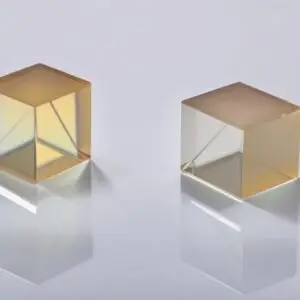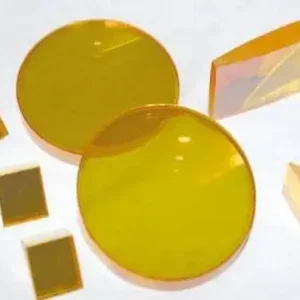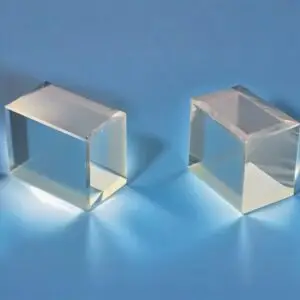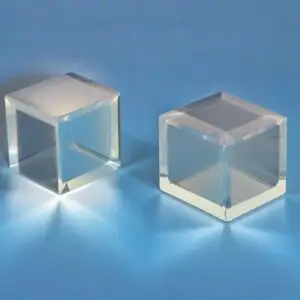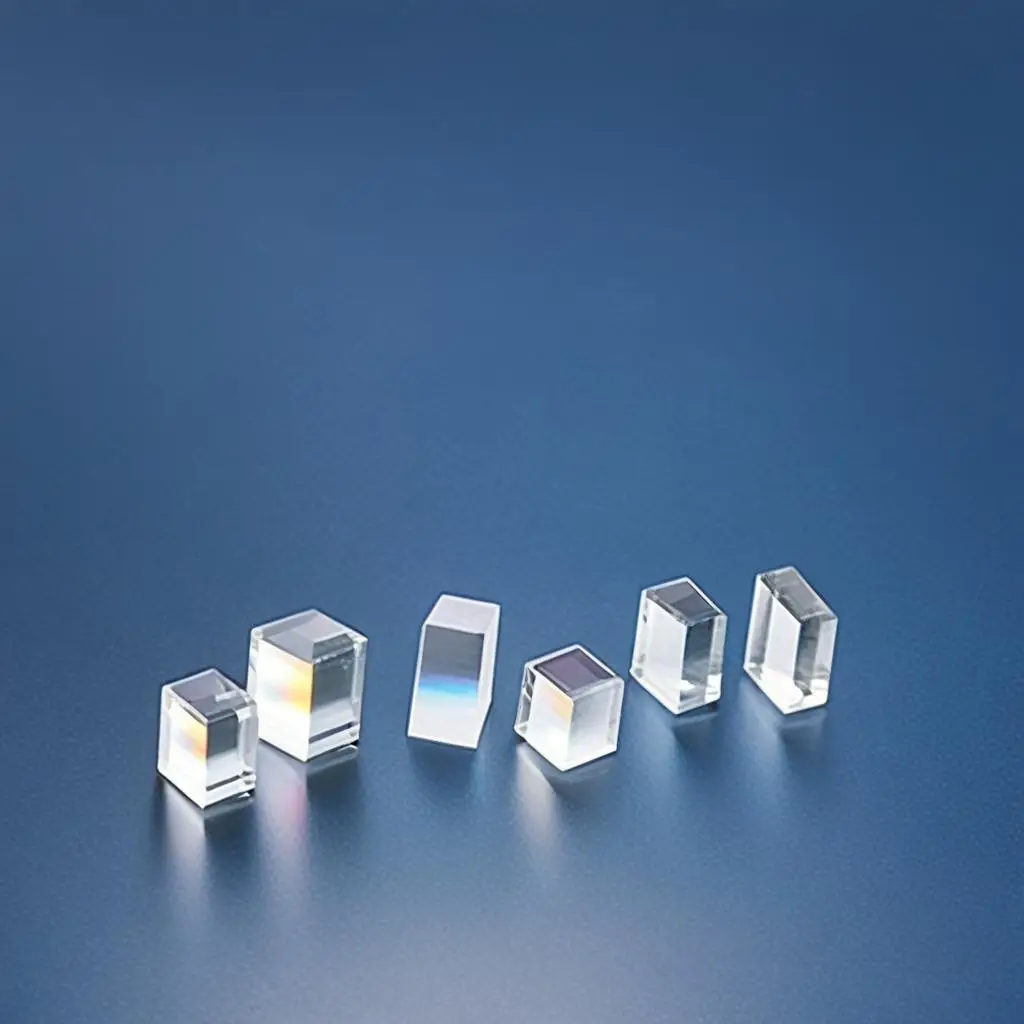
POC-OC-122480-Sapphire Cyrstal

  • Exceptional hardness (9 on the Moh’s scale) and durability for harsh environments.
  • High transmission rates across UV, visible, and IR spectrums.
  • Superior thermal conductivity and temperature resistance up to 2000°C.
  • Highly resistant to scratches, abrasion, and chemical corrosion.
  • Unaffected by atmospheric, marine, or biological exposures.

Customizable Components Available for This Material to Meet Your Specific Needs!

General Description

Sapphire Crystal, scientifically known as single-crystal aluminum oxide (Al2O3), is one of the hardest and most durable materials available for advanced photonics applications. Its unique combination of chemical, thermal, and optical properties makes it a top choice for extreme environments and precision optics. Sapphire exhibits high transmission from the ultraviolet (UV) through to the infrared (IR) range, with remarkable resistance to mechanical wear, chemical reactions, and thermal expansion. Its hexagonal crystal structure (trigonal system) ensures excellent anisotropic properties, enhancing its performance across diverse industrial applications.

General Applications and Examples

Sapphire Crystals are extensively used in the following industries due to their extraordinary properties:

  1. Aerospace:
    • Scratch-resistant windows for satellites and aircraft sensors.
    • Protective covers for high-velocity environments.
  2. Medical Technology:
    • Endoscopic lens covers.
    • Dental tool tips for precision and durability.
  3. Semiconductors:
    • Plasma tubes and LED fabrication substrates.
    • Sapphire Cyrstal wafers for integrated circuits.
  4. Military Applications:
    • High-power laser windows and rangefinders.
    • Optical sensors for advanced weaponry systems.
  5. Oil and Gas:
    • Sapphire sight windows for high-pressure environments.
    • Diffusion plates for precise chemical analysis.
  6. Research and Development:
    • SSapphire Cyrstal  cuvettes for spectrophotometry.
    • Containment tubes for chemical experiments.

Chemical and Structural Properties

PropertyValue
Chemical FormulaAl2O3
Density3.97 g/cm³ (25°C)
Hardness9 (Moh’s scale)
Melting Point2053°C
Flexural Strength1035 MPa (parallel to C-axis, 25°C)
Thermal Expansion Coefficient8.8 × 10^-6 /°C (parallel to C-axis)
Young’s Modulus435 GPa (parallel to C-axis, 25°C)
Dielectric Constant11.5 (parallel to C-axis, 25°C)
Refractive Index1.768 (ordinary ray); 1.760 (extraordinary ray)
Birefringence0.008
Crystal SystemTrigonal

Optical Properties

PropertyValue
Transparency Range0.15–5.5 µm
Optical AnisotropyUniaxial Negative
Refractive Index (Visible Range)No = 1.768; Ne = 1.760
Absorption Coefficient0.1–0.2 cm^-1 (0.66 µm, 1600°C)
Spectral Emittance0.1 (at 1600°C)

Standard Fabrication Specifications

SpecificationValue
OrientationC-axis preferred
Surface Quality40/20 to 10/5 (scratch-dig rating)
Surface FinishPolished or fine-ground
Dimensional Tolerances±0.01 mm
Maximum SizeUp to 300 mm diameter

Spectrum Transmission Curve

Sapphire exhibits high transmission rates over a broad wavelength range. Detailed spectral transmission curves can be supplied on request, highlighting the transparency from UV to IR wavelengths.
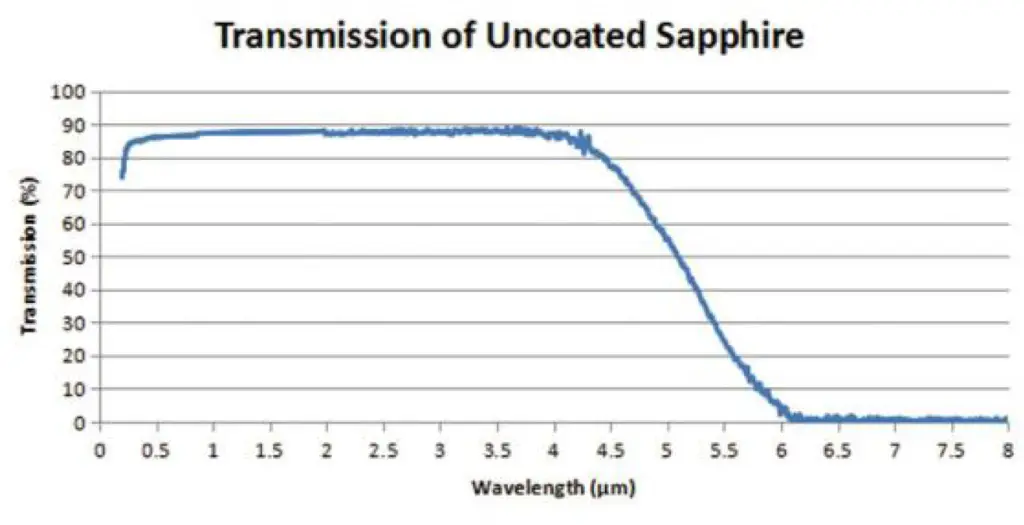
POC-uncoated Sapphire Crystal Spectrum Absorption and emission Curve

Coating Specification

  • Anti-Reflective Coatings: Enhances optical performance across UV, visible, and IR ranges.
  • Dielectric Coatings: Improves laser damage thresholds.
  • Protective Coatings: Increases durability in chemically reactive environments.
  • Adhesion Test: Compliant with MIL-C-675C military standards, an adhesion test involved applying a tape that meets LT-90 specifications onto the lens film layer. The tape was affixed fully and then removed vertically. This procedure was performed three times, resulting in no blistering or peeling.
  • Temperature Test: In line with MIL-C-675C specifications, test pieces were subjected to temperatures of -62±1℃ and 71±1℃. After maintaining them at room temperature (16℃~32℃) for two hours, the adhesion test was repeated, confirming no film detachment.
  • Abrasion Resistance Test: Conforming to MIL-C-675C and CCC-C-440 standards, the abrasion resistance test involved a gauze tester applying a minimum force of 1.0 lbs (0.45 kg) to the film. This was repeated 25 times with gauze widths of 1/4 inch (6.4mm) and 3/8 inch (9.5mm), ensuring no damage occurred to the film surface.
  • Humidity Test: Under MIL-C-675C criteria, the test piece was placed in a controlled temperature and humidity chamber set to 49 ±2℃ and 95%~100% humidity for 24 hours. The film remained intact, with no peeling, scratches, or other defects.
  • Solvent and Cleaning Testing: Following MIL-C-675C specifications, test pieces were exposed to room temperature conditions (16℃~32℃) and tested with acetone and alcohol for at least 10 minutes each. After air drying and subsequent cleaning with a cotton cloth soaked in alcohol, the film surface showed no signs of peeling or scratches.
  • Salt Spray Test: After 100 hours in a 35°C environment with a 5% saltwater concentration, the film showed no signs of damage.
ProductDimension RangePrice (USD)
Sapphire WindowsUp to 300 mm diameter$500–$5,000
Sapphire Rods10–50 mm diameter$300–$1,500
Sapphire TubesCustom dimensions$700–$3,000
Sapphire Lenses20–100 mm diameter$1,000–$10,000
Customization OptionsAvailable on requestContact for quote
//body code