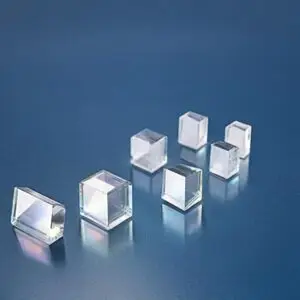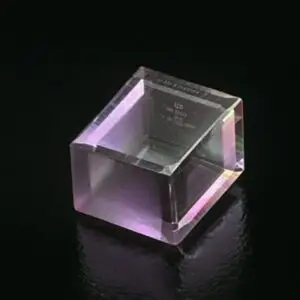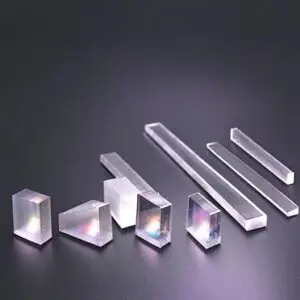
POC-OC-122496-CeF₃ Crystal

  • High density and short decay time, ideal for scintillation applications.
  • Excellent performance in high counting rate applications.
  • Strong absorption of irradiation for enhanced measurements.
  • High time resolution for precise detection processes.
  • OEM service and custom crystal dimensions available upon request.

Customizable Components Available for This Material to Meet Your Specific Needs!

General Description

Cerium Fluoride (CeF₃) is a high-performance scintillation crystal, recognized for its high density and short decay time. With a density of 6.16 g/cm³, CeF₃ offers significant advantages in applications requiring rapid response and accurate time resolution, such as high-energy physics experiments, nuclear medicine, and security scanning systems. Its unique characteristics include a hexagonal crystalline structure and dual emission peaks at 310 nm (fast) and 340 nm (slow), providing efficient detection for various scintillation-based technologies. The high thermal and mechanical stability of CeF₃ makes it an ideal choice for radiation detection systems operating in challenging environments.

General Applications and Examples

CeF₃ crystals are widely employed in a variety of advanced technologies. Below are key examples:

  • High-Energy Physics: Used in particle accelerators and detectors for identifying and measuring ionizing radiation.
  • Nuclear Medicine: Plays a critical role in PET scanners and other diagnostic imaging equipment, providing high-resolution images.
  • Security Scanning: Effective for detecting illicit radioactive materials in luggage and cargo.
  • Space Research: Deployed in space missions for radiation monitoring and cosmic ray detection.
  • Material Research: Aids in the study of radiation effects on various materials under controlled laboratory settings.

These crystals are also used in OEM setups where custom dimensions and performance optimization are required.

Chemical and Structural Properties

Property Value
Density 6.16 g/cm³
Melting Point 1324 °C
Refractive Index 1.68
Radiation Length 17 mm
Emission Peak 340 nm (slow), 310 nm (fast)
Decay Constant 30 ns (slow), 8 ns (fast)
Light Output 8.6%
Crystal Structure Hexagonal System
Cleavage Plane (0001)

Optical Properties

CeF₃ exhibits superior scintillation properties, making it highly efficient for optical and radiation detection applications. While specific nonlinear optical properties are not typically associated with CeF₃, its emission efficiency and decay profile are particularly relevant for scintillation uses. Custom designs are available upon request to optimize performance for specific optical or radiation environments.

Standard Fabrication Specifications

Specification Value
Surface Flatness < λ/8 @ 632.8 nm
Surface Quality 10-5 Scratch-Dig
Clear Aperture > 90%
Parallelism < 20 arc seconds
Perpendicularity Error < 1°
Thickness Tolerance ± 0.1 mm
Diameter Tolerance +0/-0.1 mm

Spectrum Transmission Curve

The CeF₃ crystal has dual emission peaks, ensuring efficient detection across a wide spectrum. These are:

  • Fast Peak: 310 nm for rapid detection.
  • Slow Peak: 340 nm for applications requiring higher precision.

If additional spectral data is required, further investigation and custom measurements are available.

Coating Specification

  • Standard anti-reflective coatings for optimized performance in scintillation applications.
  • Coating options: UV-optimized and custom coatings upon request to meet application-specific requirements.
  • Adhesion Test: Compliant with MIL-C-675C military standards, an adhesion test involved applying a tape that meets LT-90 specifications onto the lens film layer. The tape was affixed fully and then removed vertically. This procedure was performed three times, resulting in no blistering or peeling.
  • Temperature Test: In line with MIL-C-675C specifications, test pieces were subjected to temperatures of -62±1℃ and 71±1℃. After maintaining them at room temperature (16℃~32℃) for two hours, the adhesion test was repeated, confirming no film detachment.
  • Abrasion Resistance Test: Conforming to MIL-C-675C and CCC-C-440 standards, the abrasion resistance test involved a gauze tester applying a minimum force of 1.0 lbs (0.45 kg) to the film. This was repeated 25 times with gauze widths of 1/4 inch (6.4mm) and 3/8 inch (9.5mm), ensuring no damage occurred to the film surface.
  • Humidity Test: Under MIL-C-675C criteria, the test piece was placed in a controlled temperature and humidity chamber set to 49 ±2℃ and 95%~100% humidity for 24 hours. The film remained intact, with no peeling, scratches, or other defects.
  • Solvent and Cleaning Testing: Following MIL-C-675C specifications, test pieces were exposed to room temperature conditions (16℃~32℃) and tested with acetone and alcohol for at least 10 minutes each. After air drying and subsequent cleaning with a cotton cloth soaked in alcohol, the film surface showed no signs of peeling or scratches.
  • Salt Spray Test: After 100 hours in a 35°C environment with a 5% saltwater concentration, the film showed no signs of damage.
Dimensions (mm) Coating Price (USD) Customization Available
10 x 10 x 2 AR @ 310/340 nm 300 Yes
15 x 15 x 5 AR @ 310/340 nm 500 Yes
20 x 20 x 5 AR @ 310/340 nm 700 Yes
Custom dimensions and coatings are available upon request to meet specific user requirements.
//body code