
We design and fabricate high-performance acousto-optic devices for diverse industrial, scientific, and laser-based applications.
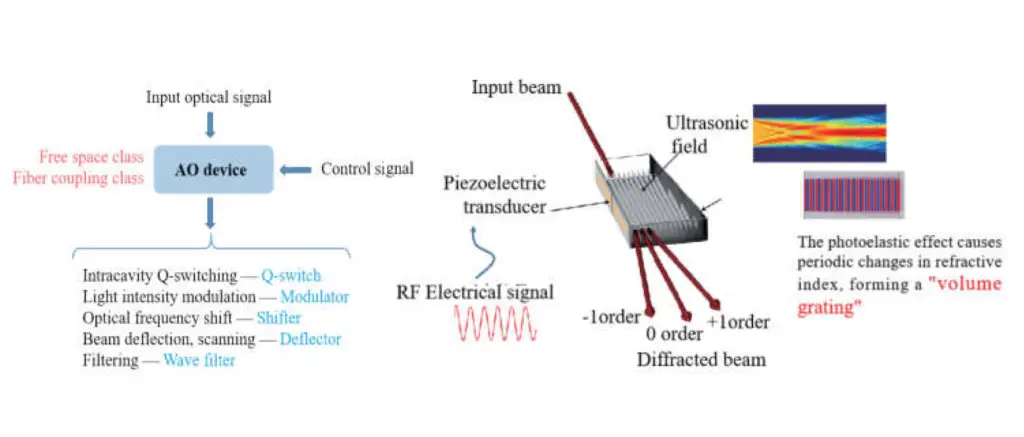
Acousto-Optic (AO) devices operate on the acousto-optic effect, where light interacts with sound waves in a crystal to modify its direction, intensity, or frequency. A piezoelectric transducer generates ultrasonic waves that create periodic variations in the crystal’s refractive index, forming a dynamic “volume grating” that diffracts the optical beam.
The efficiency of this interaction depends on factors such as acoustic wavelength, crystal characteristics, and transducer design. POC engineers AO devices to achieve high diffraction efficiency, low insertion loss, and excellent power handling, enhanced by advanced materials and precision coatings for superior reliability and performance in demanding environments.
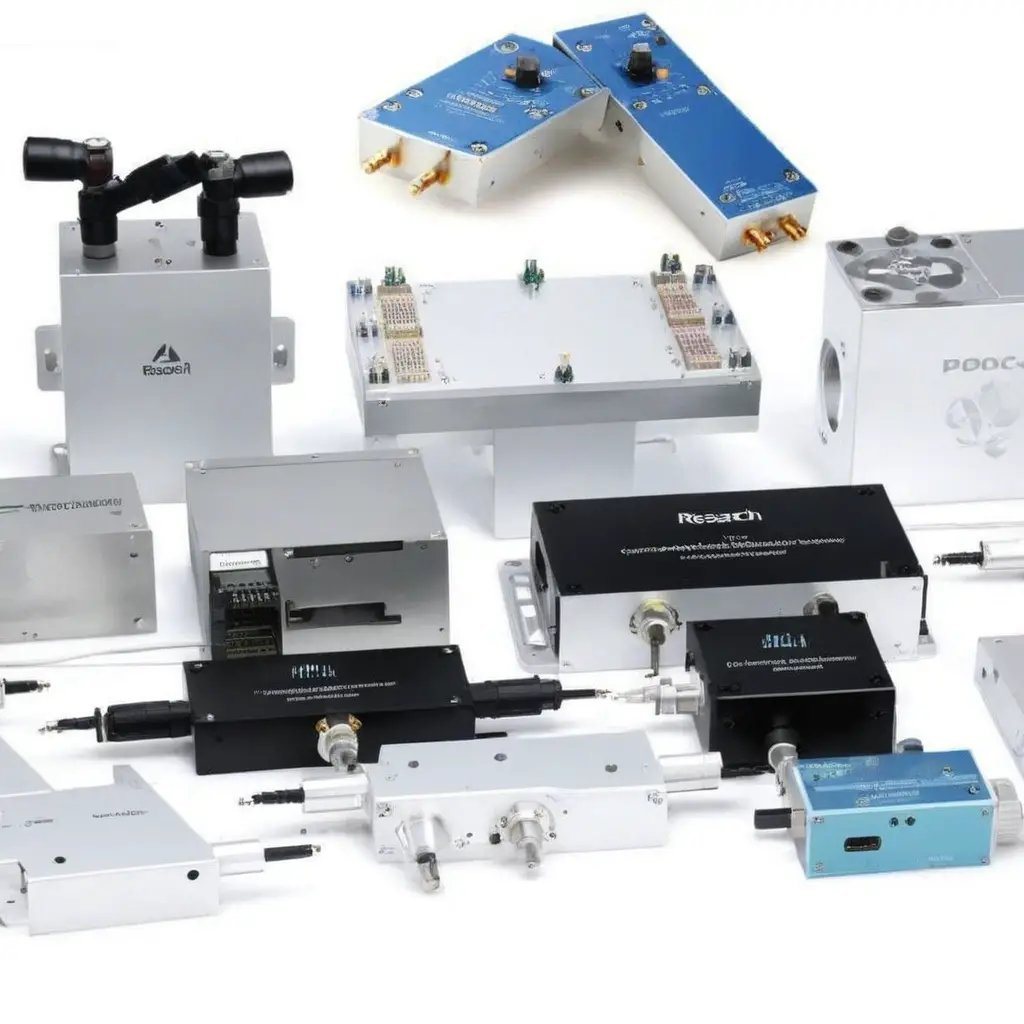
Acousto-optic devices find extensive use across industries: