
Germanium optical components are commonly used in infrared systems, thermal imaging cameras, MWIR systems, LWIR systems, infrared sensors, night vision systems, and custom optical assemblies.
Before Germanium products are delivered, they usually go through basic inspection and evaluation to confirm the dimensions, surface quality, coating condition, optical performance, and packing condition.
Basic Inspection and Evaluation of Germanium Optical Components
Germanium is a common infrared optical material used for windows, lenses, blanks, domes, and custom optical components.
Because Germanium components are often used in infrared imaging and sensing systems, basic inspection is important before delivery.
The inspection process helps confirm whether the product meets the agreed drawing, specification, coating requirement, and application needs.
Why Is Inspection Important for Germanium Products?
Germanium optical components are precision parts.
Even small defects, dimension errors, coating issues, or surface damage may affect the final system performance.
Basic inspection helps check:
- Whether the size matches the drawing
- Whether the optical surface meets the required quality
- Whether the coating appearance is acceptable
- Whether the part is clean and free from visible damage
- Whether the component is suitable for packing and delivery
The actual inspection items depend on the product type, such as blank, window, lens, dome, or coated component.
Appearance Inspection
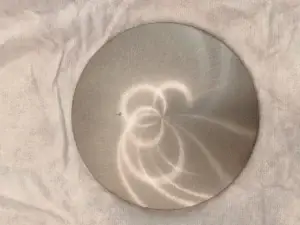
Appearance inspection is usually one of the first checks.
The surface and edge of the Germanium component are inspected for visible issues such as:
- Scratches
- Chips
- Cracks
- Stains
- Edge damage
- Coating marks
- Contamination
- Handling marks
This helps confirm that the component is visually acceptable before further testing or packing.
Dimension Inspection
Dimension inspection checks whether the part size matches the customer’s drawing or specification.
Common items include:
- Diameter
- Length and width
- Thickness
- Center thickness for lenses
- Outer diameter for domes
- Edge chamfer
- Mounting or interface dimensions
For Germanium blanks and windows, diameter and thickness are usually important.
For Germanium lenses and domes, additional shape or profile dimensions may need to be checked.
Surface Quality Inspection
Surface quality is an important inspection item for optical components.
It is usually checked based on scratch-dig requirement, such as 60/40, 40/20, or other customer specifications.
Surface quality inspection helps check whether the optical surface has scratches, digs, or visible defects within the clear aperture area.
This is especially important for Germanium windows, lenses, and domes used in infrared systems.
Surface Flatness or Surface Figure
For flat Germanium components such as windows and blanks, surface flatness may be inspected.
For Germanium lenses and domes, the surface figure or profile may be evaluated based on the optical design.
This helps confirm whether the optical surface is close to the required shape.
Common examples include:
- Surface flatness for windows
- Surface figure for lenses
- Surface profile for domes
- Radius of curvature for lenses, if required
Parallelism, Wedge or Angle Check
For Germanium windows and blanks, parallelism or wedge may be checked if required.
This is important when the component needs to maintain a controlled optical path.
For prism-like or angled parts, angle accuracy may also be evaluated.
Common checks include:
- Parallelism
- Wedge
- Angle tolerance
- Optical axis requirement, if applicable
Lens-Specific Evaluation
Germanium lenses may require additional inspection compared with flat windows or blanks.
For lenses, the evaluation may include:
- Diameter
- Center thickness
- Radius of curvature
- Surface quality
- Centering
- Edge thickness
- Coating appearance
- Focal length, if required
- Optical performance, if required
The actual inspection depends on the lens type, drawing, and customer requirement.
Dome-Specific Evaluation
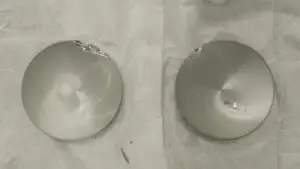
Germanium domes are curved optical components, so their inspection may include more shape-related checks.
For domes, the evaluation may include:
- Outer diameter
- Dome height
- Wall thickness
- Surface quality
- Dome profile
- Coating appearance
- Edge condition
- Clear aperture
- Mechanical fit, if required
Because domes are more complex than flat windows, the inspection requirement should be confirmed based on the drawing and application.
Coating Inspection
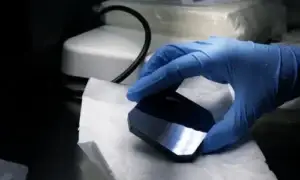
Many Germanium components require coating to improve transmission or protection.
Common coating options include:
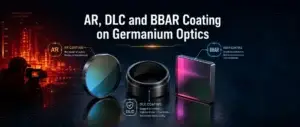
- AR coating
- DLC coating
- BBAR coating
- Custom infrared coating
Coating inspection may include:
- Coating appearance
- Coating uniformity
- Scratches or coating defects
- Peeling or delamination check
- Transmission test, if required
- Coating side confirmation
For outdoor or harsh environment applications, DLC-coated Germanium windows may require more attention to coating appearance and surface condition.
Transmission or Optical Performance Test
For some Germanium products, optical performance may also be tested.
This may include transmission measurement at the required wavelength range, such as MWIR or LWIR.
For more advanced products, additional optical testing may be required based on customer specification.
Possible checks include:
- Infrared transmission
- Focal length
- Image quality
- MTF, if required
- Wavelength-specific coating performance
Not every Germanium component requires full optical performance testing. The test items should be based on the agreed requirement.
Cleaning Before Packing
After inspection, Germanium components should be cleaned carefully before packing.
Cleaning helps remove dust, fingerprints, particles, or surface residue.
Because Germanium optics are sensitive optical components, they should be handled with care during cleaning and packing.
Packing and Warehouse Check
After inspection and cleaning, the products are packed for protection.
Packing is important because Germanium surfaces can be scratched or chipped if not protected properly.
The packing check may include:
- Individual protection
- Correct product label
- Quantity check
- Packing list check
- Protective foam or box
- Inspection report, if required
- Carton condition before delivery
After packing, the finished products can be moved to the warehouse or prepared for shipment.
Basic Inspection Items by Product Type
| Product Type | Common Inspection Items | Simple Purpose |
|---|---|---|
| Germanium Blank | Size, thickness, surface condition, edge condition | Confirm the blank is suitable for further processing |
| Germanium Window | Diameter, thickness, flatness, surface quality, parallelism, coating | Confirm protection and IR transmission quality |
| Germanium Lens | Diameter, center thickness, radius, surface quality, centering, coating | Confirm focusing and optical performance requirement |
| Germanium Dome | Outer diameter, dome height, wall thickness, surface quality, coating | Confirm curved protective component quality |
| Coated Germanium Optic | Coating appearance, coating side, transmission, surface condition | Confirm coating quality and performance requirement |
Example Inspection Checklist
| Inspection Item | Example Requirement |
|---|---|
| Material | Germanium / Ge |
| Product Type | Blank / Window / Lens / Dome |
| Dimension | As per drawing |
| Thickness | As per specification |
| Surface Quality | 60/40 scratch-dig, or based on requirement |
| Surface Flatness | λ/2 @ 632.8 nm, or based on drawing |
| Parallelism | < 3 arc min, if required |
| Clear Aperture | ≥ 90%, or based on drawing |
| Coating | Uncoated / AR / DLC / BBAR / Custom |
| Coating Appearance | No obvious coating defect within clear aperture |
| Edge Condition | Protective chamfer, no major chips |
| Transmission Test | Based on wavelength requirement, if required |
| Packing | Cleaned, protected, labeled, and packed for delivery |
Conclusion
Basic inspection is an important step before Germanium products are packed and delivered.
Germanium blanks, windows, lenses, domes, and coated optics may require different inspection items depending on their shape, function, coating, and application.
POC supplies Germanium optical components including Germanium blanks, windows, lenses, domes, AR-coated Germanium optics, DLC-coated Germanium windows, BBAR-coated Germanium components, and custom Germanium parts.
Contact us to discuss your Germanium optical component requirements.