


Description
Germanium vs Chalcogenide Glass is an important material comparison when selecting components for infrared optical systems. Both materials are used for IR lenses, windows, and thermal imaging optics, but they have different properties, manufacturing options, and typical applications.
Germanium is a well-established infrared material commonly used for IR windows, lenses, blanks, domes, and coated components. Chalcogenide Glass, also known as IRG material in some product series, is commonly used for infrared lenses, molded IR optics, and compact thermal imaging components.
When comparing Germanium vs Chalcogenide Glass, Chalcogenide Glass may be considered as an alternative to Germanium for selected applications. However, the final material choice depends on wavelength range, optical design, coating requirements, mechanical requirements, operating environment, production quantity, and cost.
Germanium vs Chalcogenide Glass: Which Infrared Material Should You Choose?
Germanium and Chalcogenide Glass are two common material options for infrared optical systems.
Both materials can be used in infrared applications, but they have different advantages, limitations, and typical use cases.
For customers designing thermal imaging systems, infrared lenses, IR windows, sensor protection components, or custom optical assemblies, understanding the difference between Germanium and Chalcogenide Glass can help with material selection.
What Is Germanium?
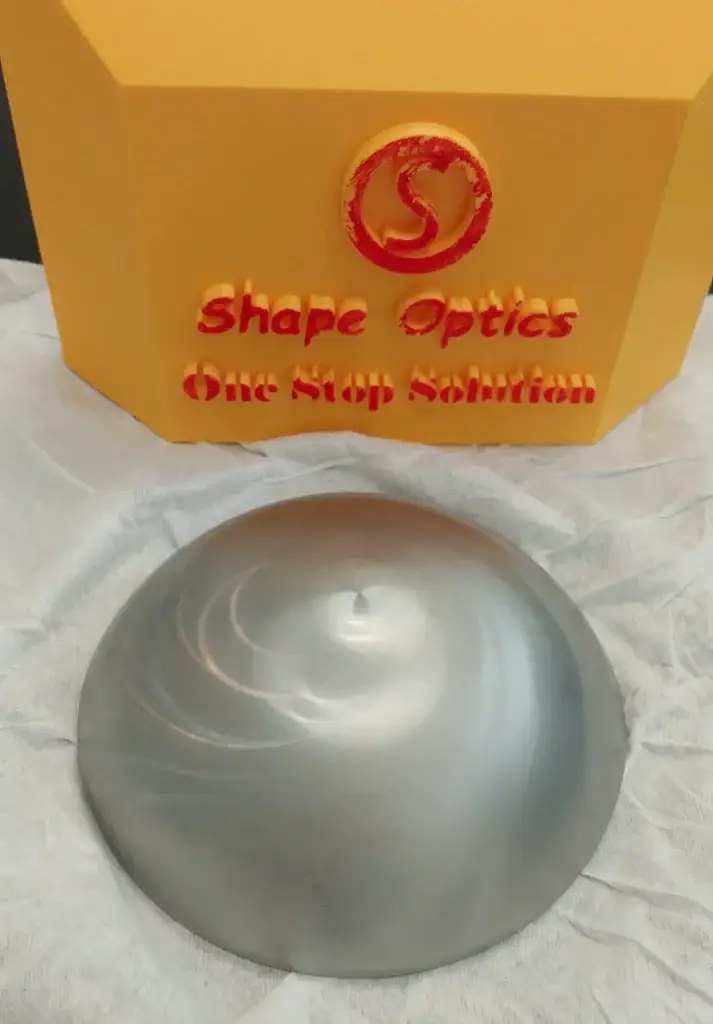
Germanium, also known as Ge, is a well-known infrared optical material.
It is commonly used in MWIR and LWIR optical systems and can be manufactured into many different component forms.
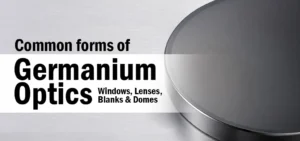
Common Germanium products include:
- Germanium windows
- Germanium lenses
- Germanium blanks
- Germanium domes
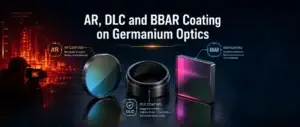
- AR-coated Germanium optics
- DLC-coated Germanium windows
- BBAR-coated Germanium components
- Custom Germanium optical parts
Germanium is often selected when the system needs reliable infrared transmission, good optical quality, and a strong established material for thermal imaging applications.
What Is Chalcogenide Glass?
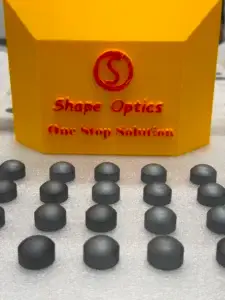
Chalcogenide Glass is a special type of infrared glass material.
In some product series, it may also be known as IRG material.
Unlike normal visible optical glass, Chalcogenide Glass is designed for infrared transmission. It is commonly used for infrared lenses, molded IR optics, optical blanks, windows, and custom IR components.
Common Chalcogenide Glass products include:
- Infrared lenses
- Molded IR lenses
- IRG lens elements
- Optical blanks
- IR windows
- Custom infrared components
- Thermal imaging lens elements
Chalcogenide Glass is often considered when the project needs infrared lens design flexibility, molded optics, compact thermal imaging lenses, or an alternative material to Germanium.
Check on Chalcogenide Glass for Infrared Optics.
Germanium as an Infrared Material
Germanium is widely used in infrared systems because it is suitable for many MWIR and LWIR applications.
It is commonly used in:
- Thermal imaging systems
- Infrared cameras
- IR sensors
- Night vision systems
- Security and surveillance systems
- Aerospace and defense applications
- Industrial inspection equipment
- Scientific instruments
- Custom IR optical assemblies
Germanium can be used for both flat components and shaped components.
For example, a Germanium window may protect a detector or optical system, while a Germanium lens may focus infrared energy onto a detector.
Chalcogenide Glass as an Alternative to Germanium
Chalcogenide Glass can be considered as an alternative to Germanium for selected infrared applications.
This may be useful when customers are looking for:
- Alternative IR lens material
- Molded infrared optics
- Compact thermal imaging lens designs
- Different manufacturing options
- Lower dependency on Germanium material
- Custom infrared lens elements
- Potential cost optimization for suitable lens designs
However, Chalcogenide Glass is not always a direct replacement for Germanium.
The final material choice depends on:
- Wavelength range
- Optical design
- Lens structure
- Coating requirement
- Mechanical strength requirement
- Operating temperature
- Environmental exposure
- Quantity
- Budget and supply consideration
For this reason, the material should be selected based on the full optical and mechanical requirement, not only by material name.
Germanium vs Chalcogenide Glass Comparison
| Item | Germanium | Chalcogenide Glass / IRG |
|---|---|---|
| Material Type | Infrared crystal material | Infrared glass material |
| Common Product Forms | Windows, lenses, blanks, domes, coated optics | IR lenses, molded optics, blanks, windows, custom components |
| Common Wavelength Use | MWIR and LWIR applications | Depending on grade, commonly used in infrared lens systems |
| Typical Strength | Established IR material with wide use in thermal imaging | Useful for IR lens design flexibility and molded optics |
| Manufacturing Method | Cutting, grinding, polishing, diamond turning, coating | Polishing, molding for suitable designs, coating |
| Coating Options | AR, DLC, BBAR, custom IR coating | AR, DLC, custom IR coating, depending on design |
| Common Applications | IR windows, thermal camera windows, lenses, domes, sensor protection | IR lenses, molded thermal imaging optics, compact lens assemblies |
| Material Selection Reason | Reliable IR performance and strong use history | Alternative IR material and useful for molded lens design |
| Best For | Windows, domes, protective optics, custom Ge optics, IR lenses | Molded IR optics, compact lenses, selected alternative lens designs |
Compare Germanium and Chalcogenide Glass for infrared applications.
When Should You Choose Germanium?
Germanium may be suitable when the application requires:
- Infrared window or protective cover
- Germanium lens or shaped optical component
- MWIR or LWIR thermal imaging use
- DLC-coated front window
- AR-coated or BBAR-coated IR component
- Dome or custom protective optical component
- Established material for demanding IR systems
- Drawing-based custom Germanium component
Germanium is commonly selected for front windows, sensor protection, lenses, domes, and optical components where the system already specifies Germanium material.
When Should You Consider Chalcogenide Glass?
Chalcogenide Glass may be considered when the application requires:
- Alternative infrared lens material
- Molded infrared lens element
- Compact thermal imaging lens design
- Custom IR lens assembly
- Reduced Germanium material dependency
- Suitable IRG material based on optical design
- Potential volume production with molded optics
It is especially useful for projects where molded optics or compact infrared lens design may be suitable.
Can Chalcogenide Glass Replace Germanium?
In some cases, yes.
Chalcogenide Glass can be considered as an alternative to Germanium for suitable infrared lens designs and selected IR optical components.
However, it should not be assumed that Chalcogenide Glass can replace Germanium in every application.
For example:
- If the drawing specifically requires Germanium, the material should follow the drawing unless redesign is allowed.
- If the part is a front protective window or dome, mechanical strength, coating, and environment must be reviewed.
- If the part is a lens element, the optical design must be checked before changing material.
- If the system has strict thermal or environmental requirements, material stability should be reviewed.
The safest approach is to provide the current Germanium specification, optical design, or application requirement for evaluation.
Application Examples
| Application | Germanium | Chalcogenide Glass |
|---|---|---|
| Thermal Camera Window | Commonly used | Possible only if suitable for design and environment |
| Infrared Lens | Commonly used | Commonly considered for IR lens design and molded optics |
| Protective IR Window | Commonly used, especially with DLC coating | Requires review based on environment and coating |
| IR Dome | Commonly used for selected custom systems | Less common, depends on design feasibility |
| Compact Thermal Lens | Can be used | Often considered for molded or compact designs |
| OEM IR Module | Can be used for windows and lens components | Can be considered for lens elements or molded optics |
| Custom IR Assembly | Common option | Possible alternative depending on optical design |
What Information Should You Provide Before Material Selection?
To compare Germanium and Chalcogenide Glass properly, it is helpful to provide:
- Application
- Current material requirement, if any
- Wavelength range
- Component type: window, lens, blank, dome, or custom part
- Diameter or size with tolerance
- Thickness or center thickness
- Surface quality
- Surface flatness or optical tolerance
- Coating requirement
- Operating temperature
- Environmental condition
- Quantity
- Drawing or optical design file
If you are currently using Germanium and want to evaluate Chalcogenide Glass as an alternative, please provide the existing Germanium specification or drawing for review.
Example Material Selection Guide
| Requirement | Suggested Material Direction |
|---|---|
| Front protective IR window | Germanium is commonly used |
| DLC-coated outdoor window | Germanium is commonly used; Chalcogenide requires review |
| Molded IR lens element | Chalcogenide Glass may be considered |
| Compact thermal imaging lens | Chalcogenide Glass or Germanium, depending on design |
| Custom IR dome | Germanium may be more common |
| Standard drawing requires Ge | Germanium should be used unless redesign is allowed |
| Looking for Germanium alternative | Chalcogenide Glass may be reviewed based on design |
| High-volume molded optic | Chalcogenide Glass may be suitable for selected projects |
Conclusion
Germanium and Chalcogenide Glass are both useful materials for infrared optical systems, but they are used differently.
Germanium is commonly used for IR windows, lenses, blanks, domes, coated optics, and protective infrared components. It is a well-established material for MWIR and LWIR applications.
Chalcogenide Glass, also known as IRG material in some product series, is commonly used for infrared lenses, molded IR optics, compact thermal imaging lenses, and custom IR components. In some applications, it can be considered as an alternative to Germanium.
The right material depends on wavelength range, optical design, coating, mechanical requirement, temperature, environment, quantity, and final application.
POC supplies Germanium windows, lenses, blanks, domes, AR-coated Germanium optics, DLC-coated Germanium windows, BBAR-coated Germanium components, and custom Germanium optical parts based on customer drawings and requirements.
Contact us to discuss your Germanium optical component or infrared material selection requirements.