
Description
When requesting a quotation for Germanium optical components, clear specifications help suppliers evaluate the part more accurately.
Important information includes product type, size, thickness, wavelength range, coating requirement, surface quality, flatness, tolerance, clear aperture, quantity, application, and drawing.
How to Specify Germanium Optical Components for Quotation
Germanium optical components are commonly used in infrared systems, thermal imaging cameras, MWIR and LWIR systems, infrared sensors, surveillance systems, industrial inspection, aerospace, defense, and scientific instruments.
To prepare an accurate quotation, the supplier needs enough information to evaluate the material, processing method, coating, inspection requirement, and lead time.
This guide explains what customers should provide when requesting Germanium windows, lenses, blanks, domes, or custom optical components.
Product Type
The first step is to confirm what type of Germanium component is required.
Common product types include:
- Germanium window
- Germanium lens
- Germanium blank
- Germanium dome
- Germanium wafer
- Coated Germanium optic
- Custom Germanium component
Different product types require different manufacturing and inspection processes.
For example, a flat Germanium window may require surface flatness and parallelism control, while a Germanium lens may require radius, center thickness, centering, and focal length evaluation.
Size and Dimensions
Customers should provide the required size and dimensional tolerance.
For round parts, provide:
- Diameter
- Thickness
- Diameter tolerance
- Thickness tolerance
For square or rectangular parts, provide:
- Length
- Width
- Thickness
- Size tolerance
For lenses, provide:
- Diameter
- Center thickness
- Edge thickness, if required
- Radius of curvature
- Clear aperture
For domes, provide:
- Outer diameter
- Inner diameter
- Dome height
- Wall thickness
- Edge structure
- Dome profile
A drawing is strongly recommended for lenses, domes, and custom shapes.
Wavelength Range
Germanium is used for infrared applications, so the wavelength range should be confirmed.
Common examples include:
| Wavelength Range | Common Use |
|---|---|
| 3–5 µm | MWIR systems |
| 8–12 µm | LWIR thermal imaging |
| 8–14 µm | LWIR thermal imaging |
| 3–12 µm / 3–14 µm | Broadband IR systems |
| Custom range | Special IR applications |
The wavelength range affects material selection, coating design, and transmission requirement.
Coating Requirement
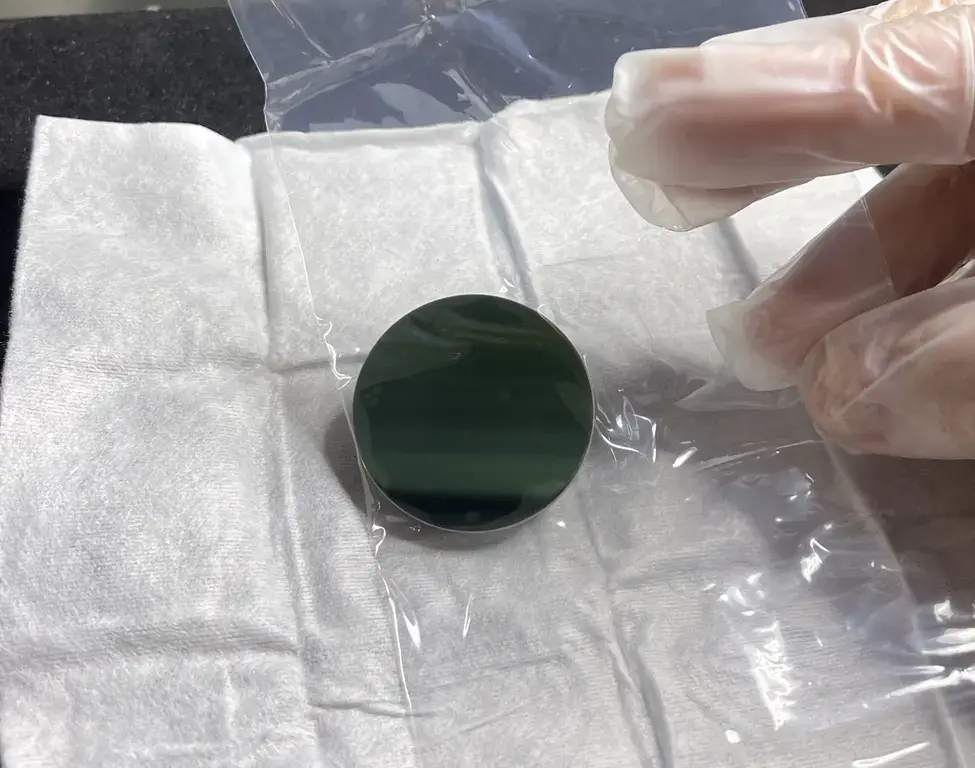
Germanium components may be supplied uncoated or coated.
Common coating options include:
- Uncoated
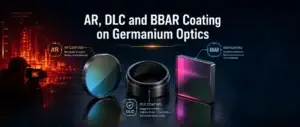
- AR coating
- DLC coating
- BBAR coating
- Custom infrared coating
Customers should also confirm:
- Coating wavelength range
- Coating side: one side or both sides
- Transmission requirement
- Blocking or reflection requirement, if any
- Environmental requirement
- Whether the coating is for protection, transmission, or both
Surface Quality
Surface quality is usually specified by scratch-dig requirement.
Common examples include:
- 80/50 scratch-dig
- 60/40 scratch-dig
- 40/20 scratch-dig
- Custom requirement based on drawing
Surface quality is important because scratches, digs, or surface defects may affect optical performance, especially within the clear aperture.
Surface Flatness or Surface Figure
For flat Germanium windows and blanks, surface flatness may be required.
For Germanium lenses and domes, surface figure or profile may be required.
Common information includes:
- Surface flatness
- Radius of curvature
- Surface figure
- Profile tolerance
- Power and irregularity
- Interferometer requirement, if any
The requirement should follow the drawing or optical design.
Parallelism, Wedge, and Centering
For Germanium windows and blanks, parallelism or wedge may be important.
For Germanium lenses, centering or wedge control may be required.
Possible requirements include:
- Parallelism
- Wedge
- Centering
- Total indicator runout
- Optical axis requirement
These specifications are especially important when the part is used in an imaging or precision optical system.
Clear Aperture
Clear aperture is the usable optical area of the component.
Customers should confirm whether the clear aperture is:
- ≥80%
- ≥85%
- ≥90%
- Custom based on drawing
The clear aperture requirement helps define the area where optical quality and coating performance should meet the specification.
Material Type
Customers may also specify the Germanium material type if required.
Common material information includes:
- Germanium / Ge
- N-Type Germanium
- P-Type Germanium
- Monocrystalline Germanium
- Polycrystalline Germanium
- Resistivity requirement
- Orientation, if required
If the material type is not fixed, customers can provide the application and wavelength range for review.
Application and Operating Environment
Application information helps the supplier understand the final use of the Germanium component.
Common applications include:
- Thermal imaging
- Infrared sensor protection
- MWIR system
- LWIR system
- Surveillance system
- Industrial inspection
- Aerospace and defense
- Scientific instrument
- Outdoor or harsh environment system
Operating environment may also affect coating and mechanical design.
Helpful information includes:
- Indoor or outdoor use
- Operating temperature
- Humidity or moisture exposure
- Dust or sand exposure
- Cleaning contact
- IP grade requirement
- Vibration or shock requirement
Quantity and Project Stage
Quantity is important for quotation and production planning.
Customers should provide:
- Prototype quantity
- Batch quantity
- Annual demand, if available
- Project stage
- Expected delivery schedule
For example:
- 2 pcs for prototype testing
- 10 pcs for pilot run
- 100 pcs for batch production
- Annual demand 500 pcs
This helps the supplier evaluate pricing, lead time, material planning, and coating batch arrangement.
Drawing or Specification File
A drawing is very helpful for Germanium quotations.
Customers are encouraged to provide:
- 2D drawing
- 3D file, if available
- Optical design file, if applicable
- Previous specification sheet
- Coating specification
- Inspection requirement
For lenses, domes, and custom parts, a drawing is usually very important because the shape and tolerance cannot be fully confirmed by text description only.
Germanium RFQ Checklist
| Item | Information to Provide |
|---|---|
| Product Type | Window / lens / blank / dome / custom part |
| Material | Germanium / N-Type / P-Type / mono / poly |
| Size | Diameter, length, width, thickness |
| Tolerance | Size tolerance, thickness tolerance |
| Wavelength Range | 3–5 µm / 8–12 µm / 8–14 µm / custom |
| Coating | Uncoated / AR / DLC / BBAR / custom |
| Coating Side | One side / both sides |
| Surface Quality | 60/40, 40/20, or custom |
| Flatness / Figure | Based on drawing or requirement |
| Parallelism / Wedge | If required |
| Clear Aperture | ≥90%, or based on drawing |
| Edge / Chamfer | Protective chamfer or drawing requirement |
| Application | Thermal imaging, sensor, surveillance, etc. |
| Environment | Indoor, outdoor, harsh environment, temperature |
| Quantity | Prototype, batch, annual demand |
| File | Drawing, coating spec, inspection requirement |
Example RFQ Specification
| Item | Example Requirement |
|---|---|
| Material | N-Type monocrystalline Germanium |
| Product Type | Infrared optical window |
| Shape | Round flat window |
| Diameter | 50.00 ± 0.01 mm |
| Thickness | 5.00 mm ± 0.01 mm |
| Wavelength Range | 8–12 µm |
| Coating | DLC coating on front side, AR coating on back side |
| Surface Quality | 60/40 scratch-dig |
| Surface Flatness | λ/2 @ 632.8 nm |
| Parallelism | ≤3 arc minutes |
| Clear Aperture | ≥90% |
| Chamfer | 0.2 mm × 45°, or based on drawing |
| Application | Outdoor thermal imaging system |
| Quantity | 20 pcs |
| Drawing | Available |
Conclusion
Clear specifications help make Germanium quotation faster and more accurate.
When requesting Germanium optical components, customers should provide product type, size, tolerance, wavelength range, coating, surface quality, flatness, clear aperture, material type, application, quantity, and drawing if available.
POC supplies Germanium windows, lenses, blanks, domes, AR-coated Germanium optics, DLC-coated Germanium windows, BBAR-coated Germanium components, and custom Germanium optical parts based on customer drawings and application requirements.
Contact us to discuss your Germanium optical component requirements.