

Common Substrate Types for PIC Platform
Photonic Integrated Circuits (PIC Platform) use different semiconductor substrates, each chosen based on its optical and electronic properties. The main materials used for PIC platforms include:
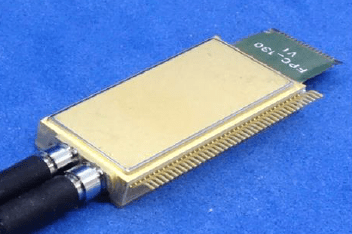
| Material | Full Name | Key Properties | Applications |
|---|---|---|---|
| SOI | Silicon-on-Insulator | CMOS-compatible, low loss at telecom wavelengths, high index contrast | Optical transceivers, data centers, telecom, sensors |
| SiN | Silicon Nitride | Wide transparency range (400 nm – 2500 nm), low propagation loss | Biosensors, quantum photonics, LiDAR, nonlinear optics |
| InP | Indium Phosphide | Direct bandgap, active optoelectronic integration, efficient light emission | Lasers, modulators, photodetectors, telecom & datacom |
| LiNbO3 (LiNb) | Lithium Niobate | Electro-optic modulation, high-speed, strong Pockels effect | Optical modulators, quantum optics, RF photonics |
Why These Materials Are Used for PIC platform?
Each material is selected based on its unique optical, electronic, and fabrication advantages:
1. Silicon-on-Insulator (SOI)
- CMOS-compatible, high refractive index contrast (Si: 3.45, SiO₂: 1.44), mature fabrication technology.
- Main applications: Optical interconnects, high-speed optical transceivers, telecom/datacom.
2. Silicon Nitride (SiN)
- Extremely low propagation loss (< 1 dB/cm), transparent in visible to infrared.
- Main applications: Biosensing, nonlinear optics, LiDAR, photonic quantum computing.
3. Indium Phosphide (InP)
- Direct bandgap semiconductor, enabling efficient light generation and detection.
- Main applications: Monolithic integration of lasers, modulators, and photodetectors for optical communications.
4. Lithium Niobate (LiNbO3)
- Strong electro-optic effect, high-speed phase modulation, high efficiency.
- Main applications: RF photonics, quantum optics, high-speed optical modulation.
Material Selection Considerations for PIC Platform
| Parameter | SOI | SiN | InP | LiNbO3 |
|---|---|---|---|---|
| Optical Loss | Low (Telecom band) | Ultra-low | Moderate | Low |
| Electro-Optic Modulation | Weak | Weak | Strong | Very Strong |
| Fabrication Complexity | CMOS-compatible | Compatible | More complex | Complex |
| Integration Capability | Passive photonics | Passive photonics | Active components (lasers, detectors) | Modulators |
Summary
- SOI: Best for high-speed optical interconnects and telecom applications.
- SiN: Ideal for low-loss waveguides in biosensing and quantum applications.
- InP: The preferred choice for integrated lasers and active components.
- LiNbO3: The gold standard for high-speed modulators in RF photonics.