



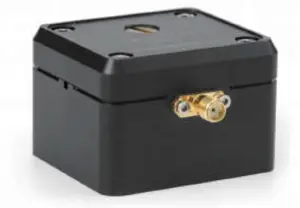

A Spot Size Converter (SSC) enables efficient light coupling between optical fibers and waveguides in photonic integrated circuits (PICs), minimizing mode mismatch and reducing coupling losses for improved performance.
Key Structures and Design Approaches
- Inversely Tapered Waveguides
- A common SSC design involves a waveguide that tapers to a narrow tip, gradually expanding the mode field diameter to match that of the connecting waveguide or fiber.
- Example: An SSC integrating a graded-index (GRIN) waveguide with a two-dimensional inversely tapered silicon waveguide demonstrated a coupling loss as low as 0.27 dB when interfacing with a cleaved single-mode fiber.
- Composite Waveguide Structures
- Utilizing multiple waveguide cores, where one core progressively widens, allows for efficient mode and energy transfer between photonic crystal fibers (PCFs) and silicon-based waveguides.
- Example: A high-efficiency SSC achieved a coupling efficiency of up to 93.99% over a length of 66 μm using this design.
- Buried Three-Dimensional (3D) SSCs
- Employ 3D tapering techniques to facilitate low-loss optical bridging between waveguides of varying sizes, effectively managing mode size transitions.
- Example: A buried 3D SSC acted as a low-loss optical bridge between different waveguide sizes, forming larger waveguides themselves.
- Reconfigurable SSCs
- Designed for adaptability, these SSCs can adjust to varying operational requirements, such as hybrid integration of different laser diodes with silicon photonic circuits.
- Example: A reconfigurable SSC was developed for the hybrid integration of a distributed feedback (DFB) laser diode with a silicon photonic integrated circuit.
Design Considerations
- Mode Field Matching: Ensuring that the mode field diameters of the interfacing components are closely matched to minimize coupling losses.
- Taper Geometry: Optimizing the taper length and angle to facilitate adiabatic mode transformation, which helps in reducing reflection and scattering losses.
- Material Selection: Choosing materials with compatible refractive indices to support efficient mode propagation and confinement.
- Fabrication Tolerances: Accounting for practical manufacturing limitations to ensure that the SSC performs as designed in real-world applications.
Refer the following review articles and papers for a comprehensive understanding of SSC structures and design methodologies:
- Reconfigurable Spot Size Converter for the Silicon Photonics Integrated Circuit
- Buried 3D Spot-Size Converters for Silicon Photonics
- High-Efficiency Spot Size Converter for Photonic Crystal Fiber-to-Waveguide Using Composite Waveguide Structures
- The Low-Loss Spot Size Converter for Alignment with Cleaved Single-Mode Fiber and Silicon Wire Waveguide