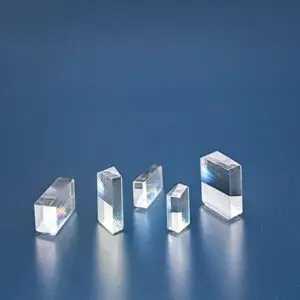
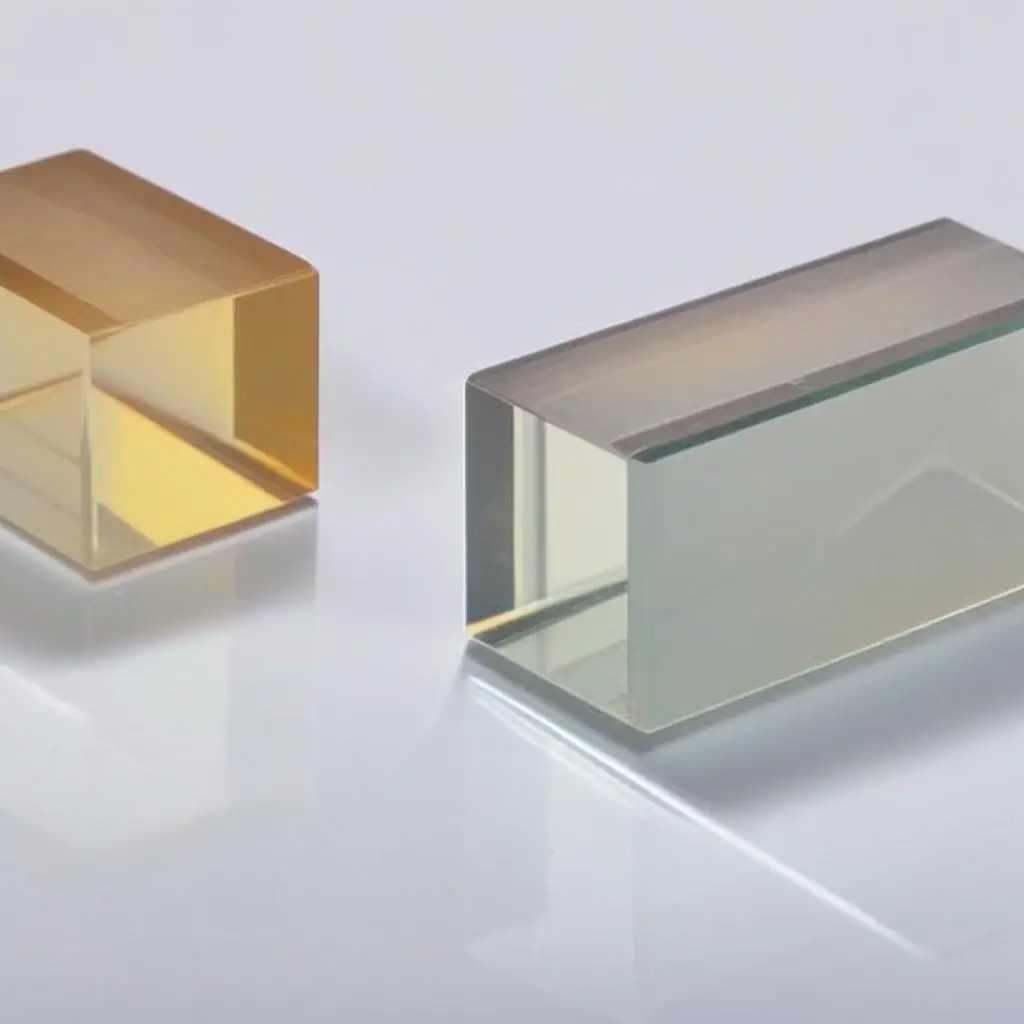
POC-OC-122487-Zerodur glass

  • Zerodur glass offers near-zero thermal expansion, ensuring dimensional stability even in extreme environments.
  • High resistance to thermal and mechanical stresses, ideal for precision applications.
  • Excellent optical and mechanical properties make it suitable for metrology and optical applications.
  • Used in applications demanding high precision and long-term stability, such as astronomy and semiconductor manufacturing.

Customizable Components Available for This Material to Meet Your Specific Needs!

General Description

Zerodur glass is a high-performance glass-ceramic material originally produced by Schott and is known for its unique properties such as ultra-low thermal expansion and exceptional dimensional stability. While POC does not manufacture Zerodur, the company expertly processes this material for demanding applications in precision optics, metrology, and scientific research.

With a coefficient of thermal expansion close to zero, Zerodur remains dimensionally stable even under extreme temperature changes, making it indispensable for applications requiring exceptional precision and reliability. Its chemical and mechanical properties ensure its suitability in environments where durability and performance are critical, such as astronomical telescopes, semiconductor lithography, and industrial metrology systems. Zerodur’s versatility is reflected in its use in optical components like mirrors, substrates, and precision measuring tools.

General Applications and Examples

  1. Astronomy and Space Exploration
    Zerodur Glass is widely used in the construction of large telescope mirrors for space and ground-based observatories. Its ability to remain dimensionally stable under fluctuating temperatures ensures the accuracy of astronomical observations.
  2. Semiconductor Lithography
    Zerodur serves as a substrate material in lithography equipment for semiconductor manufacturing, where its thermal stability is essential for nanometer-scale precision.
  3. Precision Metrology
    The dimensional stability of Zerodur Glass makes it ideal for use in metrological systems, ensuring consistent and accurate measurements over extended periods.
  4. High-Precision Optics
    Zerodur is processed into optical components such as windows, prisms, and beam splitters for laser systems, spectrometers, and imaging devices.
  5. Scientific Research and Instrumentation
    From interferometers to advanced spectrometers, Zerodur Glass is a vital material in research setups requiring unparalleled precision and stability.

Chemical and Structural Properties

PropertyValue
Material TypeGlass-ceramic
Density2.53 g/cm³
Thermal Expansion Coefficient~0.02 × 10^-6/K
Young’s Modulus90 GPa
Poisson’s Ratio0.24
Hardness (Knoop)650
Refractive Index (at 550 nm)~1.54
Transparency Range0.3–2.5 µm
Chemical DurabilityHighly resistant to acids and alkalis

Optical Properties

PropertyValue
Thermal StabilityUltra-stable for precision optics
Surface Quality10-5 (scratch-dig)
Surface Flatnessλ/10 @ 632.8 nm
Optical HomogeneityExcellent across large dimensions
Absorption CoefficientLow, minimizing energy loss

Standard Fabrication Specifications

SpecificationValue
Dimensional Tolerance±0.02 mm
Surface Flatnessλ/10 @ 632.8 nm
Parallelism<5 arcseconds
Scratch-Dig Quality10-5
Maximum SizeUp to 1000 mm (customizable)
Beveling<0.2 × 45°

Spectrum Transmission Curve

Transmission data for Zerodur Glass indicates high transparency within the 0.3–2.5 µm range. These characteristics make it suitable for visible and near-infrared applications. Detailed transmission curves can be provided upon request.

Coating Specification

  • Anti-Reflective Coatings: Available to enhance transparency for specific wavelengths.
  • Metallic Coatings: For high-reflectivity applications such as mirrors.
  • Custom Coatings: Tailored solutions for laser optics, imaging systems, and scientific instruments.
  • Adhesion Test: Compliant with MIL-C-675C military standards, an adhesion test involved applying a tape that meets LT-90 specifications onto the lens film layer. The tape was affixed fully and then removed vertically. This procedure was performed three times, resulting in no blistering or peeling.
  • Temperature Test: In line with MIL-C-675C specifications, test pieces were subjected to temperatures of -62±1℃ and 71±1℃. After maintaining them at room temperature (16℃~32℃) for two hours, the adhesion test was repeated, confirming no film detachment.
  • Abrasion Resistance Test: Conforming to MIL-C-675C and CCC-C-440 standards, the abrasion resistance test involved a gauze tester applying a minimum force of 1.0 lbs (0.45 kg) to the film. This was repeated 25 times with gauze widths of 1/4 inch (6.4mm) and 3/8 inch (9.5mm), ensuring no damage occurred to the film surface.
  • Humidity Test: Under MIL-C-675C criteria, the test piece was placed in a controlled temperature and humidity chamber set to 49 ±2℃ and 95%~100% humidity for 24 hours. The film remained intact, with no peeling, scratches, or other defects.
  • Solvent and Cleaning Testing: Following MIL-C-675C specifications, test pieces were exposed to room temperature conditions (16℃~32℃) and tested with acetone and alcohol for at least 10 minutes each. After air drying and subsequent cleaning with a cotton cloth soaked in alcohol, the film surface showed no signs of peeling or scratches.
  • Salt Spray Test: After 100 hours in a 35°C environment with a 5% saltwater concentration, the film showed no signs of damage.
ProductDimensions (mm)Surface FlatnessPrice (USD)
Zerodur Mirror Substrate100 × 100 × 20λ/10$2,000–$4,000
Zerodur Prism50 × 50 × 10λ/8$1,200–$2,500
Zerodur Optical Window200 × 200 × 30λ/6$3,000–$6,000
Customization OptionsAvailable upon requestTailored SpecificationsContact for quote
//body code