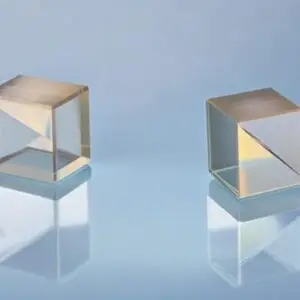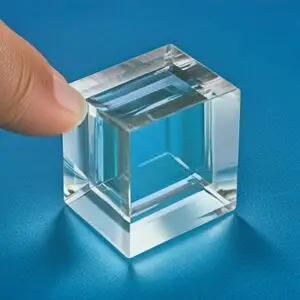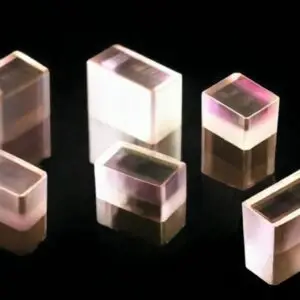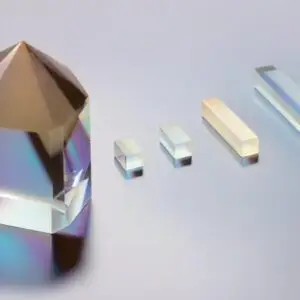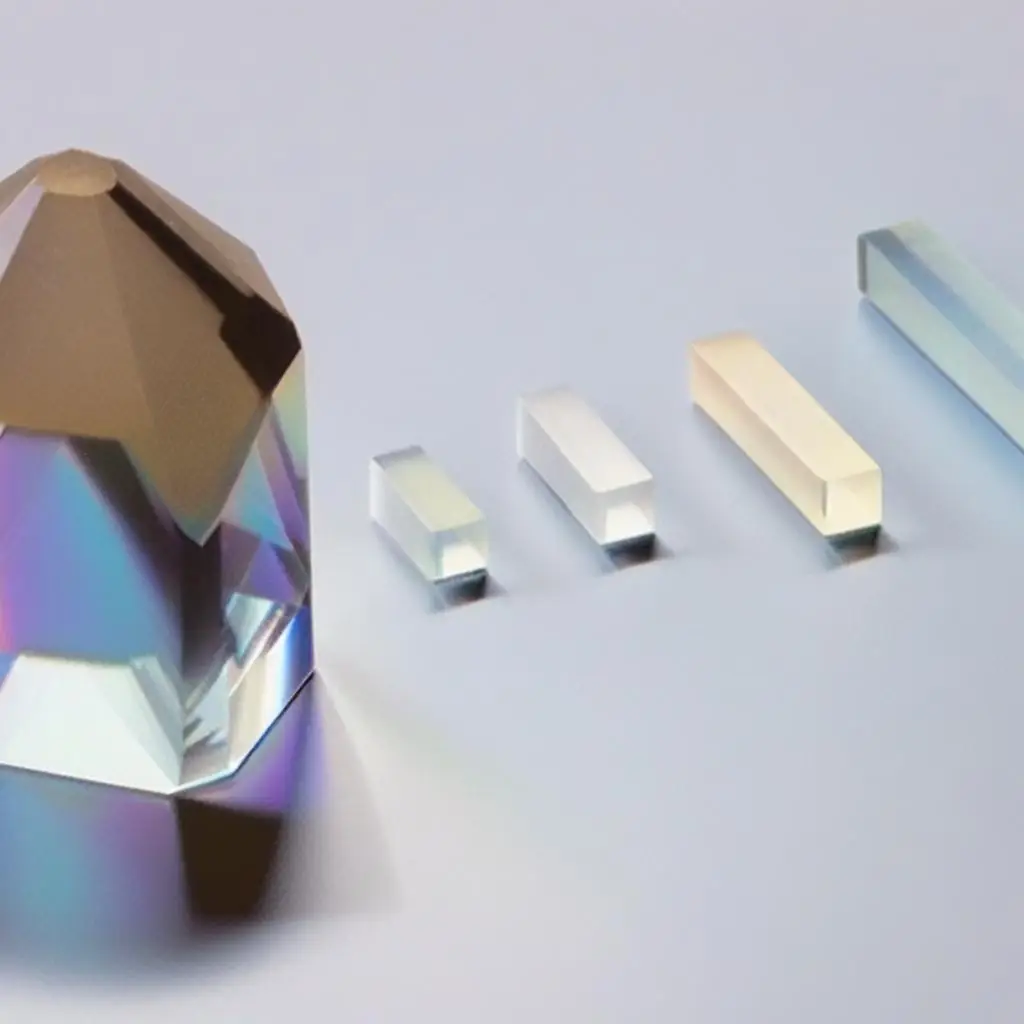
The Color Center Diamond, primarily featuring nitrogen-vacancy (NV) centers, represents an engineered single crystal diamond with unique quantum properties. These NV centers are atomic-scale defects consisting of a nitrogen atom adjacent to a vacancy in the diamond lattice. Negatively charged NV centers exhibit excellent spin coherence properties, making them ideal for quantum information science, sensing applications, and fundamental physics experiments.
Photonics On Crystals provides high-purity single crystal diamonds with controlled NV concentrations. The manufacturing process utilizes advanced doping techniques to achieve uniform NV distribution. Depending on specific requirements, NV densities are available in two configurations: DNV-B1 (low-density) and DNV-B14 (high-density). These materials are optimized for precision sensing, enabling groundbreaking advancements in quantum communication, magnetometry, and strain field detection.
The Color Center Diamond finds extensive use in:
Example Use Case: In secure quantum communication, high-density NV-doped Color Center Diamonds ensure stable and reliable quantum state transmission over long distances. For magnetometry, low-density NV configurations achieve ultra-sensitive field detection in biophysical and industrial applications.
| Property | Value |
|---|---|
| Crystal Orientation | {100} ± 3° |
| Standard Dimensions (mm) | 3 x 3 x 0.5 ± 0.05 |
| Edge Roughness | ≤ 0.2 mm |
| Carbon-13 Isotope Fraction | 1.1% |
| Characteristic | DNV-B1 | DNV-B14 |
|---|---|---|
| Typical Nitrogen Density (N[0]) | 800 ppb | 13 ppm |
| Typical NV Density | 300 ppb | 4.5 ppm |
| Typical Coherence Time T2 (µs) | 1 | 0.5 |
| Typical Coherence Time T2* (µs) | 200 | 10 |
| Parameter | Value |
|---|---|
| Spin Coherence Time | Long stability at room temperature |
| Magnetic Sensitivity | High performance for precise sensing |
| Absorption Coefficient Range | Low for visible and infrared wavelengths |
| Photon Yield | Optimized for quantum efficiency |
| Fabrication Parameter | Details |
|---|---|
| Orientation | Customizable orientations available |
| Thickness | Configurable based on user needs |
| Surface Quality | < 1 nm RMS for optical-grade applications |
Custom coatings are available upon request to enhance the surface quality and extend the operational performance of the diamond. Protective layers can minimize environmental impacts, including thermal and chemical exposure
| Product Type | Dimensions (mm) | NV Density | Price (USD) |
|---|---|---|---|
| DNV-B1 | 3 x 3 x 0.5 | Low (300 ppb) | 1200 |
| DNV-B14 | 3 x 3 x 0.5 | High (4.5 ppm) | 1500 |
| Custom Configurations | As requested | Customizable | Upon Request |