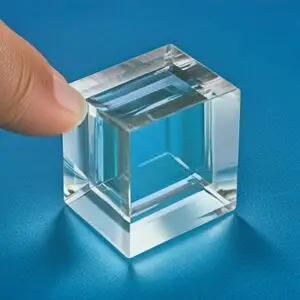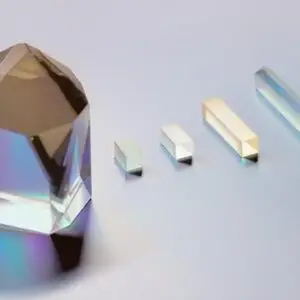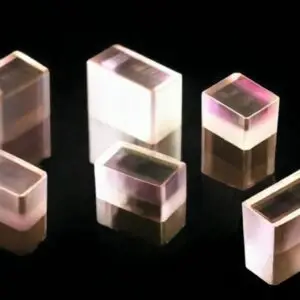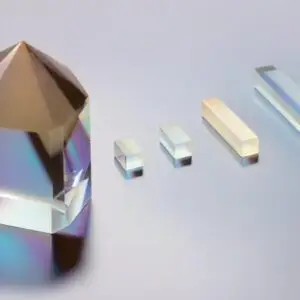
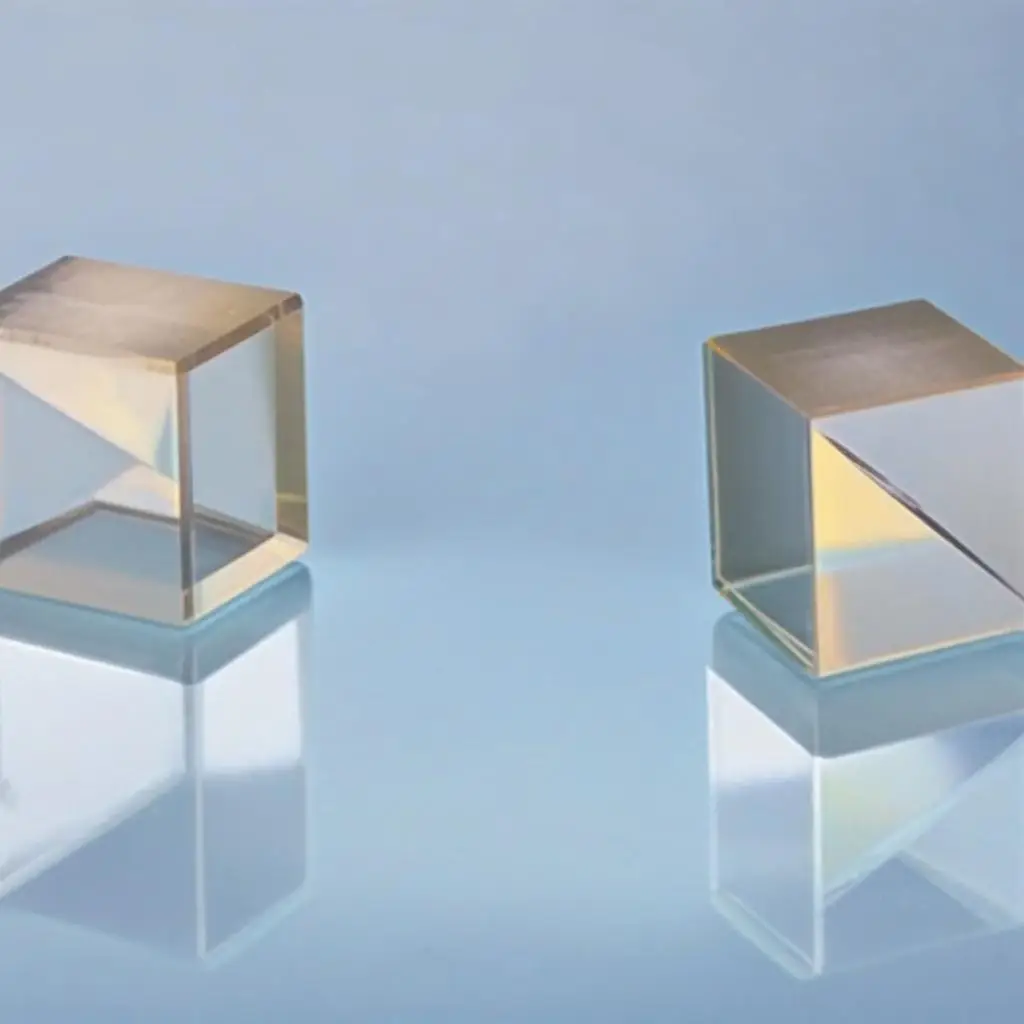
POC-OC-122509-Electronic Grade Diamond Crystal

  • Exceptional thermal conductivity (>2000 W/m·K) ideal for heat dissipation applications.
  • High electron and hole mobility (>2000 cm²/V·s) for advanced electronic and optoelectronic devices.
  • Ultra-low impurity levels (Nitrogen [N]: <5 ppb, Boron [B]: <1 ppb) for high purity applications.
  • Customizable dimensions up to Ø110 mm with precise edge quality (surface roughness Ra <0.5 nm).
  • Superior dielectric properties with wide bandgap (5.47 eV) suitable for high-frequency applications.

Customizable Components Available for This Material to Meet Your Specific Needs!

General Description

Electronic Grade Diamond is a synthetic diamond material engineered using Chemical Vapor Deposition (CVD) technology. It offers unparalleled thermal, electronic, and optical properties. Featuring ultra-low defect densities (~10¹⁴ cm⁻³) and minimal impurities, it is the material of choice for high-power electronic devices, quantum computing, and advanced thermal management systems. Its intrinsic characteristics, including a wide bandgap and high carrier mobility, make it a leading solution for high-performance semiconductor applications. These diamonds are available in single-crystal and polycrystalline forms, each tailored to specific industrial and scientific needs.

General Applications and Examples

  • Thermal Management: Utilized in high-power laser systems and microelectronics as heat spreaders due to its exceptional thermal conductivity.
  • Quantum Computing: Ideal for hosting nitrogen-vacancy (NV) centers, enabling high-sensitivity magnetometry and quantum communication.
  • Semiconductor Devices: Advanced material for power electronics, including high-voltage diodes and field-effect transistors.
  • High-Precision Optics: Applicable in high-power laser windows and X-ray optics with minimal thermal distortion.
  • High-Energy Physics: Essential in particle detectors for its excellent radiation hardness and high charge collection efficiency.

Chemical and Structural Properties

Properties Single Crystal Polycrystalline Notes
Thermal Conductivity (W/m·K) >2000 >1900 Measured at room temperature.
Electron Mobility (cm²/V·s) >2000 >1000 At a field of 0.5 V/μm.
Hole Mobility (cm²/V·s) >2000 >1800
Bandgap (eV) 5.47 5.47 Wide bandgap characteristic.
Nitrogen Impurities [N] (ppb) <5 <50 EPR measured.
Boron Impurities [B] (ppb) <1 <1 SIMS measured.
Thermal Expansion Coefficient (ppm/K) 1.0 ± 0.1 1.0 ± 0.1 Measured at 300 K.

Optical Properties

Optical Properties Value
Refractive Index 2.41 (average)
Transmission Range 225 nm – 25 μm
Absorption Coefficient <0.1 cm⁻¹ @ 10.6 μm
Scattering Loss <0.02% @ 1064 nm
Surface Roughness (Ra) <0.5 nm (single-crystal polished)

Standard Fabrication Specifications

Specification Value
Crystal Orientation {100} ± 3°
Standard Sizes (mm) 2×2, 4×4, 5×5, 10×10
Thickness Tolerance ±0.02 mm
Laser Cut Angle 3° ± 0.1°
Edge Quality (mm) <0.2
Surface Roughness (Ra) <0.5 nm

Spectrum Transmission Curve

Transmission data for Electronic Grade Diamond shows excellent transparency across the ultraviolet (UV), visible, and infrared (IR) spectrum, extending from 225 nm to 25 μm. This wide range makes it suitable for diverse optical applications.

Coating Specification

  • Anti-Reflective Coatings: Available for specific wavelengths (e.g., 1064 nm or 1550 nm) to reduce reflection losses.
  • Protective Coatings: Custom coatings for durability in high-energy applications, including multilayer dielectric or diamond-like carbon (DLC) coatings.
  • Adhesion Test: Compliant with MIL-C-675C military standards, an adhesion test involved applying a tape that meets LT-90 specifications onto the lens film layer. The tape was affixed fully and then removed vertically. This procedure was performed three times, resulting in no blistering or peeling.
  • Temperature Test: In line with MIL-C-675C specifications, test pieces were subjected to temperatures of -62±1℃ and 71±1℃. After maintaining them at room temperature (16℃~32℃) for two hours, the adhesion test was repeated, confirming no film detachment.
  • Abrasion Resistance Test: Conforming to MIL-C-675C and CCC-C-440 standards, the abrasion resistance test involved a gauze tester applying a minimum force of 1.0 lbs (0.45 kg) to the film. This was repeated 25 times with gauze widths of 1/4 inch (6.4mm) and 3/8 inch (9.5mm), ensuring no damage occurred to the film surface.
  • Humidity Test: Under MIL-C-675C criteria, the test piece was placed in a controlled temperature and humidity chamber set to 49 ±2℃ and 95%~100% humidity for 24 hours. The film remained intact, with no peeling, scratches, or other defects.
  • Solvent and Cleaning Testing: Following MIL-C-675C specifications, test pieces were exposed to room temperature conditions (16℃~32℃) and tested with acetone and alcohol for at least 10 minutes each. After air drying and subsequent cleaning with a cotton cloth soaked in alcohol, the film surface showed no signs of peeling or scratches.
  • Salt Spray Test: After 100 hours in a 35°C environment with a 5% saltwater concentration, the film showed no signs of damage.
Dimensions (mm) Thickness (mm) Orientation Price (USD)
2×2 0.5 {100} ± 3° $150
4×4 0.5 {100} ± 3° $250
10×10 1.0 {100} ± 3° $450
Custom Sizes Upon Request Variable TBD
//body code