POC-OC-122429-Nd:KGW Crystal

  • Excellent laser gain material with high emission cross-section and low laser oscillation threshold.
  • High fluorescent lifetime due to reduced quenching effects of Nd³⁺ ions.
  • Wide absorption bandwidth (808 nm) for efficient diode-pumped lasers.
  • Suitable for picosecond and femtosecond laser pulse generation.
  • Custom dimensions and coating options available upon request.

Customizable Components Available for This Material to Meet Your Specific Needs!

General Description

Neodymium Doped Potassium Gadolinium Tungstate (Nd:KGW) is a monoclinic crystal known for its exceptional laser gain properties. Its unique chemical structure minimizes the quenching effects of Nd³⁺ ions, enabling higher doping concentrations and improved fluorescence efficiency. The absorption band at 808 nm (12 nm FWHM) aligns well with commercial diode lasers, providing efficient pumping and low laser threshold.

The material’s thermal conductivity, stability under high-power conditions, and broad emission bandwidth make it ideal for diode-pumped solid-state lasers. Additionally, Nd:KGW can function as a Raman converter for generating secondary wavelengths. These characteristics ensure its wide adoption in industrial, medical, and scientific laser systems.

General Applications and Examples

       1. Industrial Applications

  • Laser Cutting and Drilling: High-power Nd:KGW Crystal lasers provide precision machining capabilities.
    Example: Used in microelectronics for intricate drilling and cutting of semiconductor wafers.
  • Material Processing: Efficient in marking and engraving non-metallic materials.
  1. Medical Applications
  • Laser Surgery: Nd:KGW lasers are utilized in delicate surgical procedures due to their precise emission wavelengths.
    Example: Ophthalmology surgeries such as corneal reshaping.
  1. Scientific Research
  • Spectroscopy and Raman Conversion: The crystal serves as an efficient Raman laser converter, extending operational wavelengths.
    Example: Raman conversion of 1067 nm to eye-safe spectral ranges.
  • Femtosecond Laser Systems: Suitable for high-energy laser pulse generation in ultrafast systems.
  1. Military and Defense
  • Range Finders: Diode-pumped Q-switched Nd:KGW Crystal lasers provide accurate measurements in range-finding systems.

Chemical and Structural Properties

PropertyValue
Crystal StructureMonoclinic
Space Groupc₂/c (C2/c)
Lattice Parametersa = 8.087 Å, b = 10.374 Å, c = 7.588 Å
Density7.27 g/cm³
Refractive Index (at 1067 nm)nₓ = 2.049, nᵧ = 1.978, nᶻ = 2.014
Mohs Hardness5
Melting Point1075 °C
Thermal ConductivityKₓ = 2.6 W/m·K, Kᵧ = 3.8 W/m·K, Kᶻ = 3.4 W/m·K
Young’s Modulus115.8 GPa (Eₓ), 92.4 GPa (Eᵧ)
Thermal Expansion Coefficientαₓ = 4 × 10⁻⁶/K, αᵧ = 1.6 × 10⁻⁶/K, αᶻ = 8.5 × 10⁻⁶/K

Optical, Laser and Nonlinear Optical Properties

PropertyValue
Emission Wavelength1070 nm
Stimulated Emission Cross-Section1.48 × 10⁻¹⁹ cm²
Fluorescent Lifetime110 µs (3% doping), 90 µs (8% doping)
Absorption Bandwidth14 nm
Absorption Cross-Section1.28 × 10⁻¹⁹ cm²
Gain Bandwidth15 nm
Pump Wavelength808 nm (FWHM 12 nm)
Refractive Indexnₓ = 2.049, nᵧ = 1.978, nᶻ = 2.014

Standard Fabrication Specifications

SpecificationValue
Orientation[010]
Standard Dopant ConcentrationNd: 3%, 5%, 8%
Maximum Length50 mm
Dimensional ToleranceDiameter: ±0.1 mm, Length: ±0.5 mm
Surface Quality (Scratch/Dig)20/10
Surface Flatnessλ/6 @ 633 nm
Parallelism<20 arc seconds
Perpendicularity<15 arc minutes

Spectrum Transmission Curve

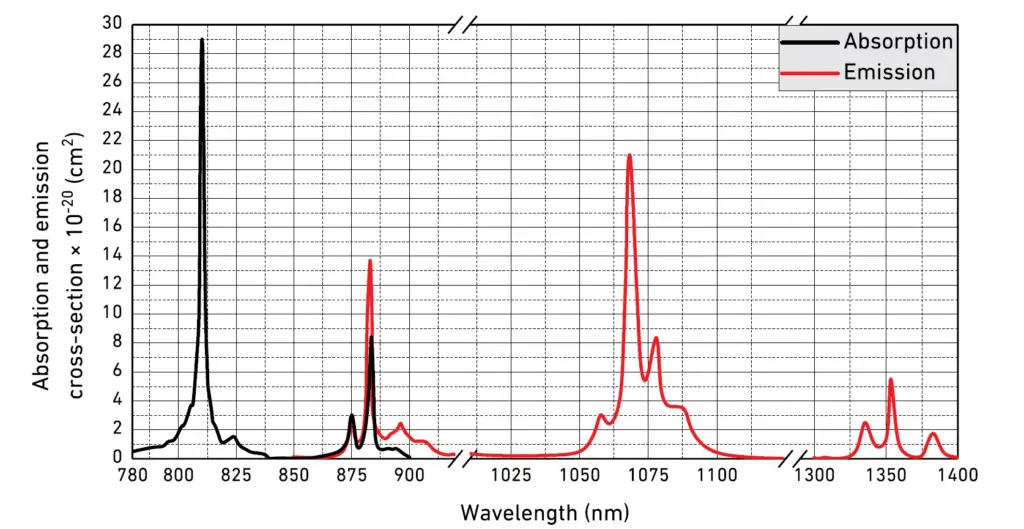
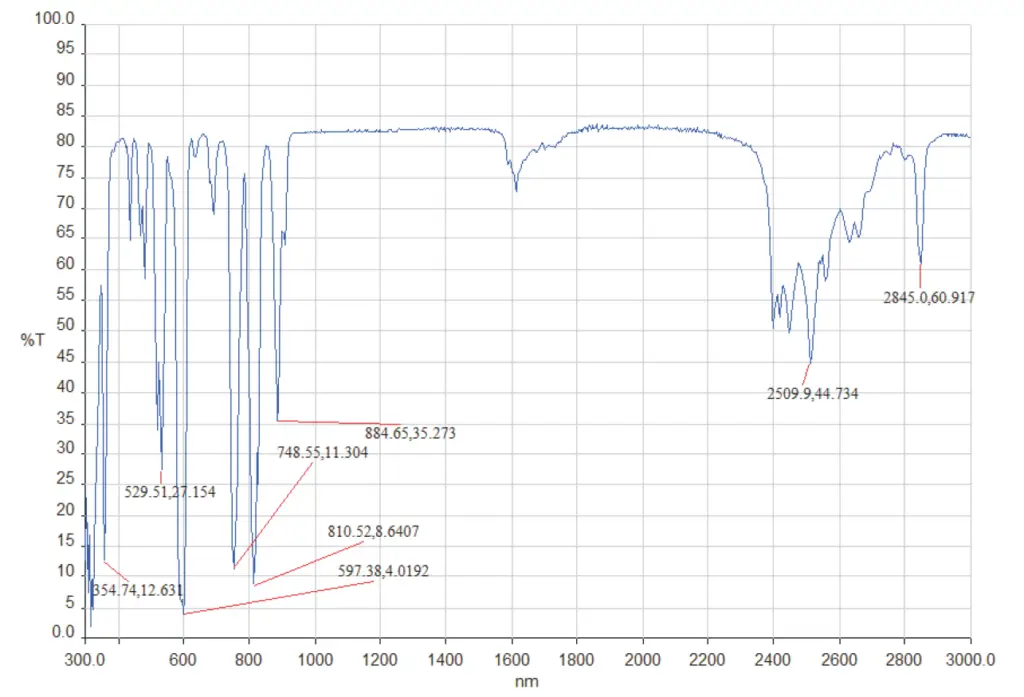
Nd:KGW demonstrates excellent transmission efficiency from visible to near-infrared wavelengths. The graph below illustrates the crystal’s transparency curve, indicating strong absorption at 808 nm and emission at 1070 nm.
POC-Nd KGW-continued Crystal Spectrum Transmission Curve
POC-Nd KGW Crystal Spectrum Transmission Curve
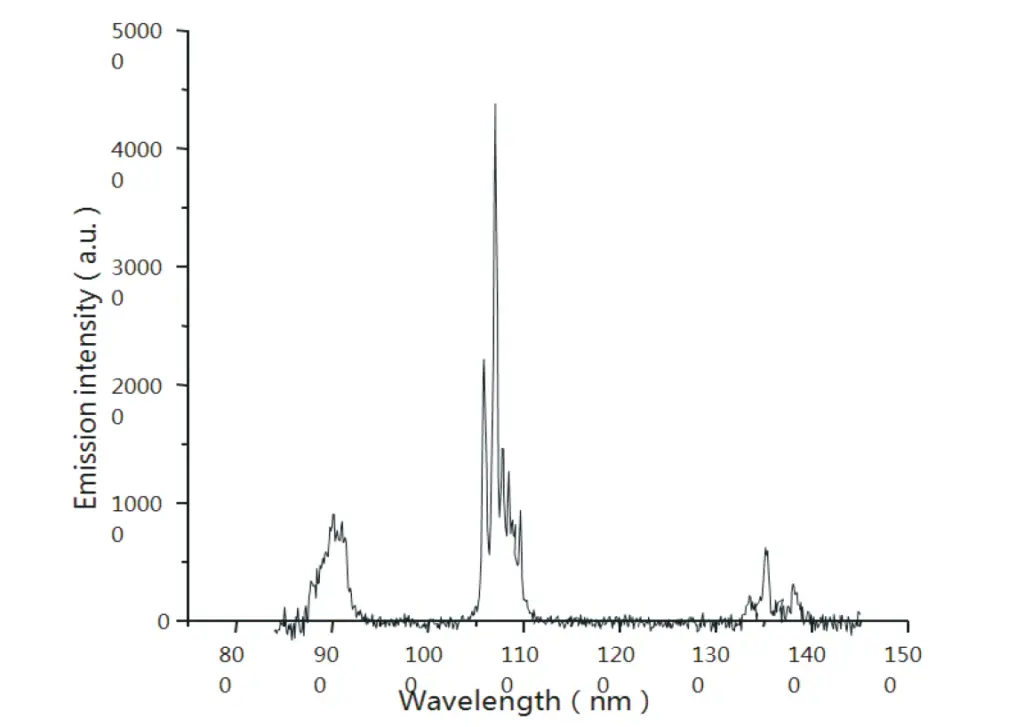
POC-Nd KGW Crystal Spectrum Emission Curve

Coating Specification

Coating TypeSpecifications
AR CoatingR < 0.2% at 808 nm, R < 0.15% at 1067 nm
Custom CoatingsAvailable upon request

  • Adhesion Test: Compliant with MIL-C-675C military standards, an adhesion test involved applying a tape that meets LT-90 specifications onto the lens film layer. The tape was affixed fully and then removed vertically. This procedure was performed three times, resulting in no blistering or peeling.
  • Temperature Test: In line with MIL-C-675C specifications, test pieces were subjected to temperatures of -62±1℃ and 71±1℃. After maintaining them at room temperature (16℃~32℃) for two hours, the adhesion test was repeated, confirming no film detachment.
  • Abrasion Resistance Test: Conforming to MIL-C-675C and CCC-C-440 standards, the abrasion resistance test involved a gauze tester applying a minimum force of 1.0 lbs (0.45 kg) to the film. This was repeated 25 times with gauze widths of 1/4 inch (6.4mm) and 3/8 inch (9.5mm), ensuring no damage occurred to the film surface.
  • Humidity Test: Under MIL-C-675C criteria, the test piece was placed in a controlled temperature and humidity chamber set to 49 ±2℃ and 95%~100% humidity for 24 hours. The film remained intact, with no peeling, scratches, or other defects.
  • Solvent and Cleaning Testing: Following MIL-C-675C specifications, test pieces were exposed to room temperature conditions (16℃~32℃) and tested with acetone and alcohol for at least 10 minutes each. After air drying and subsequent cleaning with a cotton cloth soaked in alcohol, the film surface showed no signs of peeling or scratches.
  • Salt Spray Test: After 100 hours in a 35°C environment with a 5% saltwater concentration, the film showed no signs of damage.
Dimensions (mm)Length (mm)DopingCoatingSKUPrice (USD)
3 × 353%AR@808-1067 nm7798$480
3 × 3603%AR@1067 nm7800Request Quote
3 × 355%AR@808-1067 nm7796$480
3 × 355%Uncoated7797$420
CustomCustomCustomCustomizableCustomRequest Quote
//body code