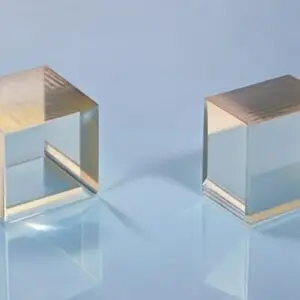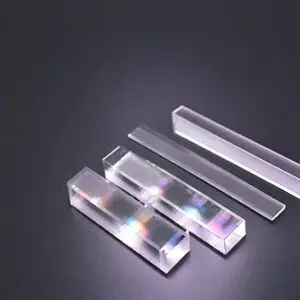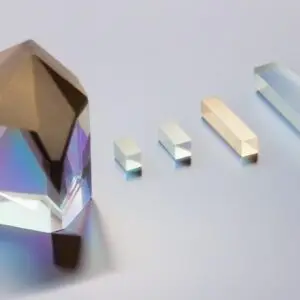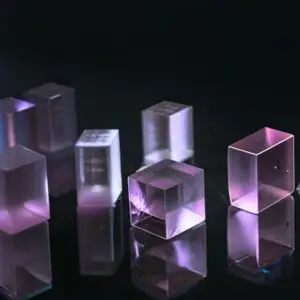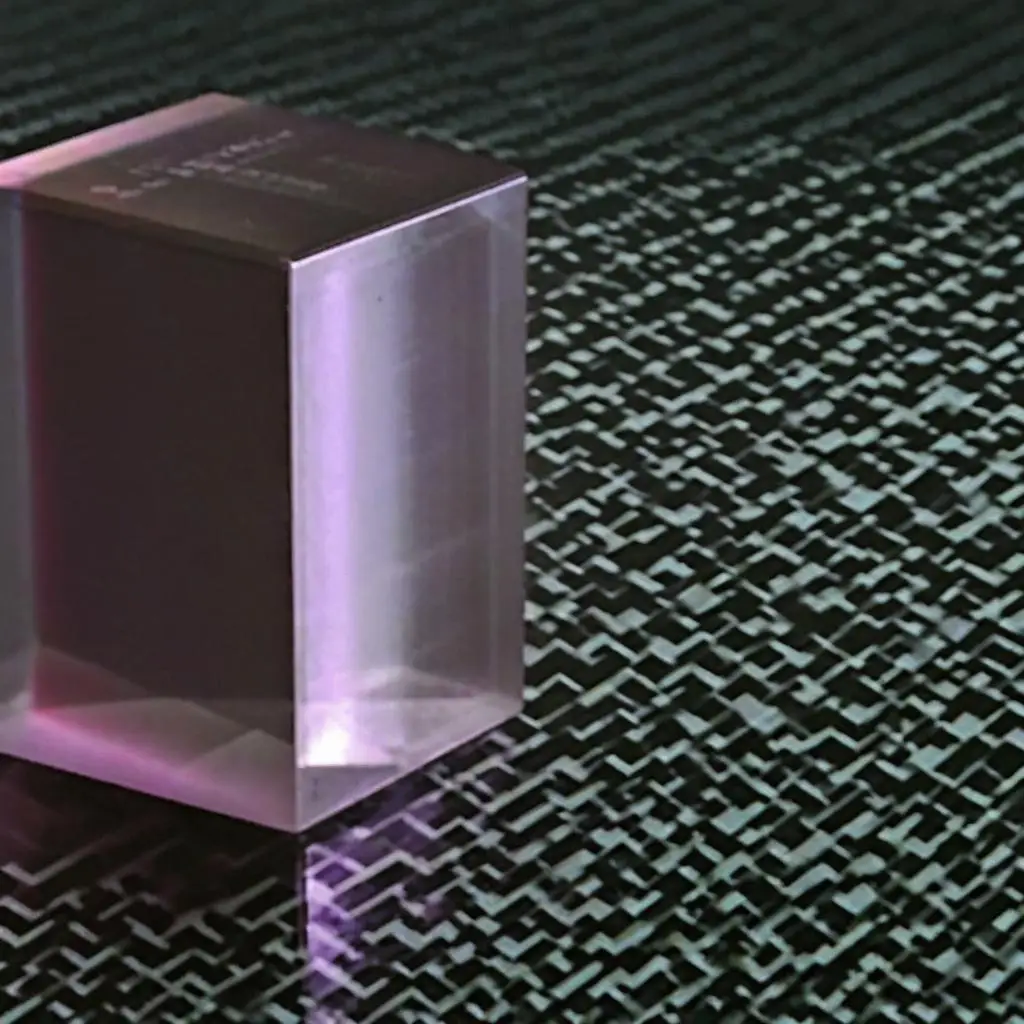
POC-OC-122436-Cr:LiSAF Crystal

  • Broad absorption and emission bands suitable for femtosecond laser applications.
  • High slope efficiency and energy storage capabilities.
  • Nonlinear refractive index significantly lower than Ti:Sapphire, reducing parasitic nonlinearities.
  • Customizable crystal dimensions and coatings upon request.
  • Durable with excellent thermal and mechanical properties.

Customizable Components Available for This Material to Meet Your Specific Needs!

General Description

Cr:LiSAF (Chromium-doped Lithium Strontium Aluminum Fluoride) crystals are exceptional laser materials for producing ultra-short pulses and high-energy lasers. The material is characterized by its trigonal crystal structure and high fluorescence efficiency, making it a reliable choice for femtosecond and CPA (Chirped Pulse Amplification) laser systems. Cr:LiSAF crystals offer broad absorption and emission spectra in the near-infrared region, ensuring effective pumping using flash lamps or diode lasers. They feature low nonlinear refractive indices, making them suitable for constructing high-Q cavities with minimal losses. Their tunable wavelength operation and high laser damage threshold position them as an efficient medium for laser development.

General Applications and Examples

Cr:LiSAF crystals are widely utilized in:

  1. Femtosecond Lasers: The wide emission spectrum facilitates the generation of femtosecond pulses (~10 fs) for precision material processing and biomedical applications.
  2. CPA Laser Systems: Excellent energy storage and low thermal distortion make Cr:LiSAF Crystal ideal for high-power laser systems.
  3. Scientific Research: Used in spectroscopy, pump-probe experiments, and advanced microscopy techniques.
  4. Industrial Applications: Precision micromachining and fine material removal benefit from its ultra-short pulse generation capability.
  5. Medical Applications: Laser systems for corneal surgery and other sensitive medical procedures.

Chemical and Structural Properties

PropertySpecification
FormulaCr:LiSAF
Crystal StructureTrigonal (Point Group P31c)
Lattice Parametersa = 5.084 A, c = 10.21 A
Melting Point766 °C
Density3.45 g/cm³
Hardness4.6 (Mohs Scale)
Fracture Toughness0.40 (1/c)
Thermal Conductivity3.3 W/mK (parallel), 3.0 W/mK (perpendicular)
Thermal Expansion Coefficient-10 x 10^-6 K^-1 (parallel), 25 x 10^-6 K^-1 (perpendicular)
Specific Heat0.842 J/gK

Optical, Laser and Nonlinear Optical Properties

PropertySpecification
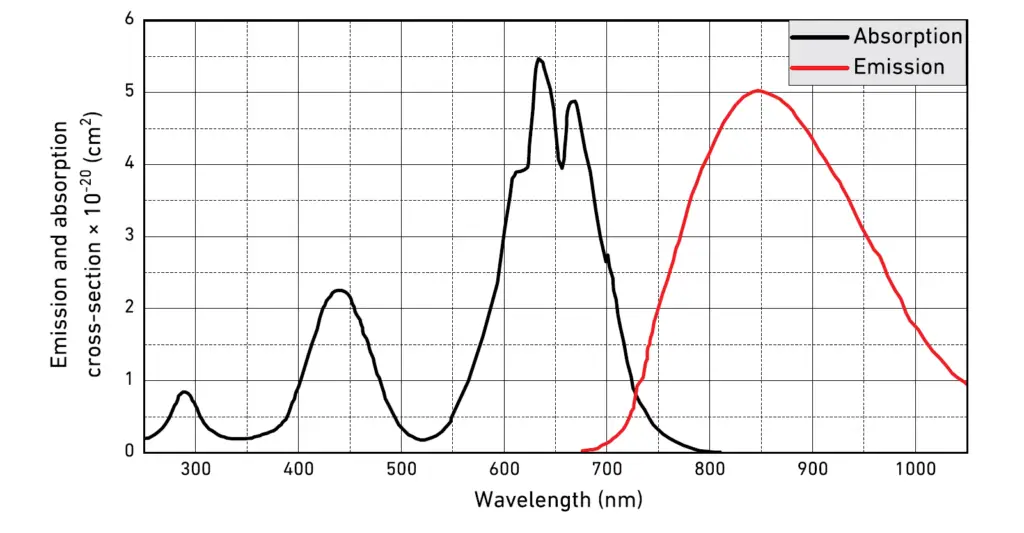
Emission Peak846 nm
Absorption Peak670 nm
Emission Cross Section4.8 x 10^-20 cm²
Fluorescence Lifetime67 µs
Scatter Losses< 0.2%/cm
dn/dT (Refractive Index Temp Coeff)-4.8 x 10^-6 (parallel), -2.5 x 10^-6 (perpendicular)

Standard Fabrication Specifications

PropertySpecification
Dopant ConcentrationCr: 0.5–1.0 at.%
Surface Quality10/5 (MIL-PRF-13830B)
DimensionsDiameter: 2-16 mm, Length: 1-60 mm
FlatnessLambda/8 at 633 nm
Parallelism< 20 arc sec
Perpendicularity< 15 arc min
Chamfer0.2 mm x 45°

Spectrum Transmission Curve

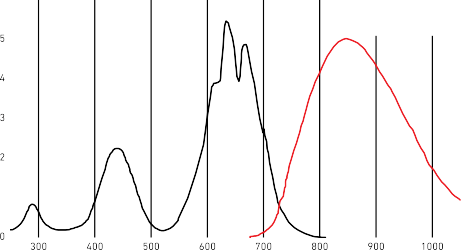
The spectrum demonstrates broad absorption and emission bands, especially in the 650-900 nm range, suitable for tunable laser operations.
Cr:LiSAF crystals
POC-Cr LiSAF Crystal Spectrum Transmission Curve

Coating Specification

  • Anti-Reflective (AR) Coatings: R < 0.1% at 850 nm.
  • Custom coatings available for broader wavelength ranges.
  • Adhesion Test: Compliant with MIL-C-675C military standards, an adhesion test involved applying a tape that meets LT-90 specifications onto the lens film layer. The tape was affixed fully and then removed vertically. This procedure was performed three times, resulting in no blistering or peeling.
  • Temperature Test: In line with MIL-C-675C specifications, test pieces were subjected to temperatures of -62±1℃ and 71±1℃. After maintaining them at room temperature (16℃~32℃) for two hours, the adhesion test was repeated, confirming no film detachment.
  • Abrasion Resistance Test: Conforming to MIL-C-675C and CCC-C-440 standards, the abrasion resistance test involved a gauze tester applying a minimum force of 1.0 lbs (0.45 kg) to the film. This was repeated 25 times with gauze widths of 1/4 inch (6.4mm) and 3/8 inch (9.5mm), ensuring no damage occurred to the film surface.
  • Humidity Test: Under MIL-C-675C criteria, the test piece was placed in a controlled temperature and humidity chamber set to 49 ±2℃ and 95%~100% humidity for 24 hours. The film remained intact, with no peeling, scratches, or other defects.
  • Solvent and Cleaning Testing: Following MIL-C-675C specifications, test pieces were exposed to room temperature conditions (16℃~32℃) and tested with acetone and alcohol for at least 10 minutes each. After air drying and subsequent cleaning with a cotton cloth soaked in alcohol, the film surface showed no signs of peeling or scratches.
  • Salt Spray Test: After 100 hours in a 35°C environment with a 5% saltwater concentration, the film showed no signs of damage.
DimensionsLengthDopantCoatingSKUPrice (USD)
5 x 5 mm12 mm3%AR@670-1100 nm770
5 x 5 mm12 mm3%Uncoated930
//body code