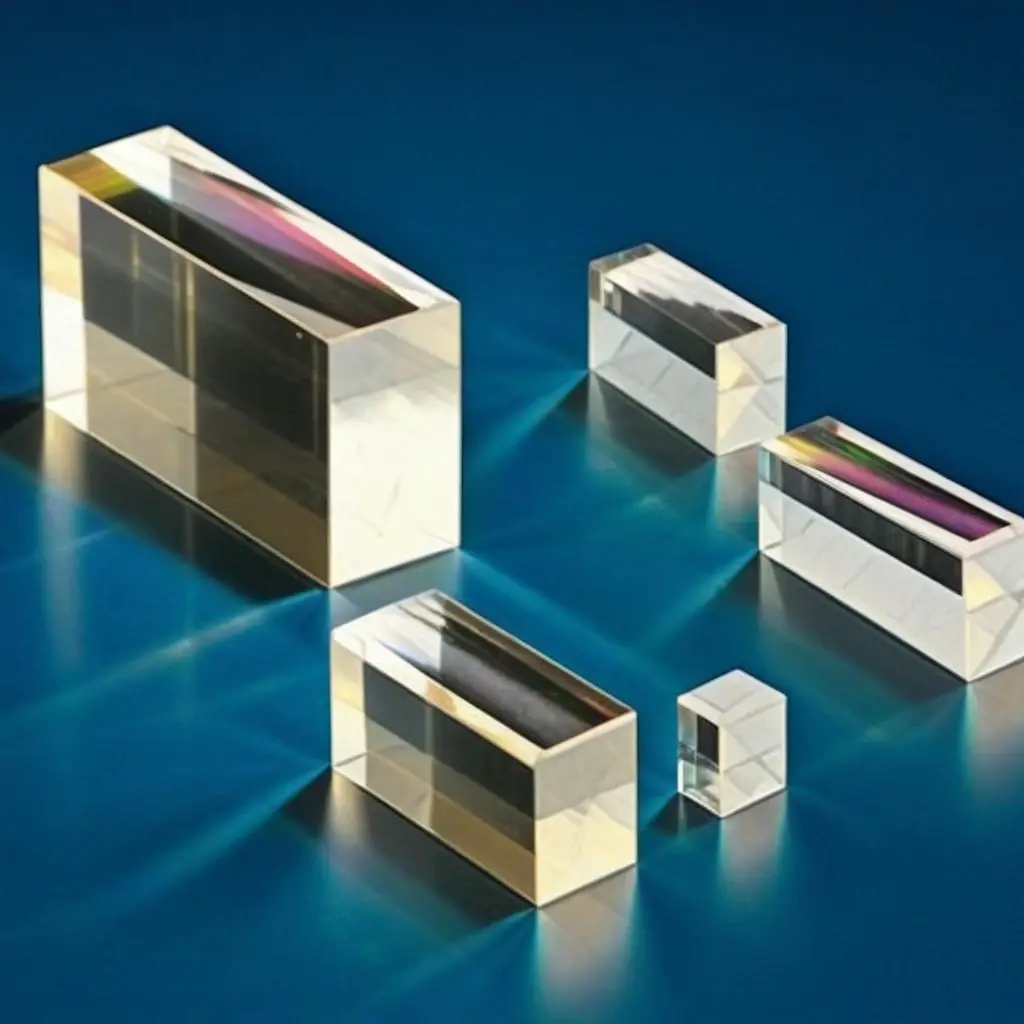
POC-OC-122443-Diffusion Bonded Crystal

  • Significantly reduces thermal lensing effects for high-power laser applications.
  • Enhanced thermal stability and performance due to bonded crystal structure.
  • Combines undoped and laser crystals to optimize energy transfer and heat dissipation.
  • Supports multiple crystal combinations like YVO4 + Nd:YVO4, Cr:YAG + Nd:YAG, etc.
  • Available in diverse assembly configurations to meet custom requirements.

Customizable Components Available for This Material to Meet Your Specific Needs!

General Description

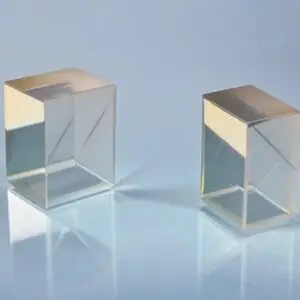
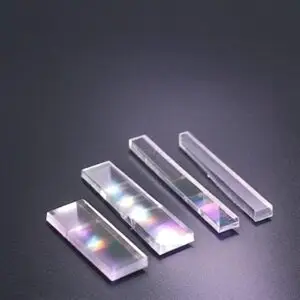
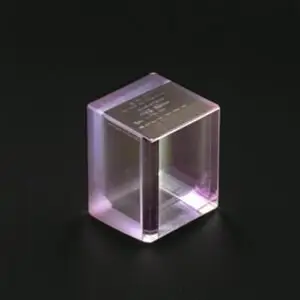
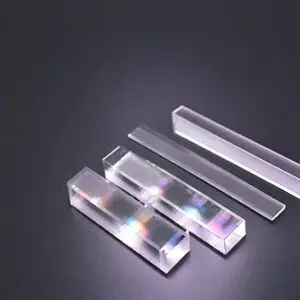
Diffusion Bonded Crystals are advanced composite materials made by fusing laser and undoped crystals using optical contact techniques under high-temperature bonding. This design minimizes thermal lensing effects caused by high-power laser operations and enhances the thermal conductivity and energy transfer efficiency of the laser medium. By integrating undoped crystals, the bonded crystal reduces heat accumulation and ensures consistent beam quality. Common combinations include YVO4 + Nd:YVO4 and Cr:YAG + Nd:YAG. These crystals are widely applied in lasers requiring high thermal stability and reliable performance under continuous operation.

The technology allows for a seamless fusion of different crystal types, preserving the optical and mechanical integrity of the final product. This bonding technique is critical in high-energy lasers used for precision applications like LIDAR systems, material processing, and medical devices.

General Applications and Examples

Diffusion Bonded Crystals are essential in several advanced laser applications:

  • High-Power Solid-State Lasers: Used in industrial and scientific laser systems requiring high thermal management for continuous and pulsed operations.
  • LIDAR Systems: Employed in navigation and range-finding applications due to their superior optical performance and thermal stability.
  • Medical Devices: Utilized in high-precision laser systems for surgical and therapeutic applications.
  • Laser Material Processing: Ideal for cutting, welding, and engraving tasks due to enhanced energy transfer efficiency.
  • Scientific Research: Supports high-power experiments, including nonlinear optics and spectroscopy, by providing stable and reliable laser mediums.

Examples:

  1. YVO4 + Nd:YVO4 + YVO4 Assembly: Enhances energy transfer efficiency and reduces thermal effects, making it suitable for diode-pumped solid-state lasers.
  2. Cr:YAG + Nd:YAG Combination: Offers passive Q-switching capabilities with excellent thermal properties, making it ideal for compact and portable laser systems.
  3. Custom Configurations: Tailored for specific applications like high-precision lasers used in three-dimensional imaging and material diagnostics.

Chemical and Structural Properties

Parameter Value/Specification
Material Type Laser crystal + Undoped crystal
Crystal Structure Varies by type (e.g., YVO4, YAG)
Thermal Conductivity Enhanced by undoped crystal
Thermal Expansion Coefficient Low, dependent on crystal types
Bonding Technology Optical contact and high-temperature bonding
Damage Threshold High, suitable for high-power lasers

Optical, Laser and Nonlinear Optical Properties

Crystal Assembly Application Optical Property
YVO4 + Nd:YVO4 + YVO4 Diode-pumped solid-state lasers High energy transfer, low thermal effects
Cr:YAG + Nd:YAG Passive Q-switching applications High thermal stability, excellent durability
YVO4 + YAG + Nd:YAG Advanced solid-state laser systems Efficient beam quality

Standard Fabrication Specifications

Parameter Specification
Crystal Size Customizable (based on assembly)
Surface Quality (Scratch/Dig) 10/5 or better
Flatness λ/8 @633 nm
Wavefront Distortion λ/4 @633 nm
Parallelism < 20 arc sec
Perpendicularity < 15 arc min
Chamfer 0.2 mm × 45°

Spectrum Transmission Curve

Spectrum transmission curves may vary based on the specific crystal combinations. For detailed technical data, please contact POC.

Coating Specifications

  • Standard AR-Coating: Reflectivity < 0.2% at specified laser wavelengths.
  • Customized Coating Options: Available upon request for specific wavelength ranges.
  • High-Reflection Coatings (HR): Optimized for specific laser applications.
  • Adhesion Test: Compliant with MIL-C-675C military standards, an adhesion test involved applying a tape that meets LT-90 specifications onto the lens film layer. The tape was affixed fully and then removed vertically. This procedure was performed three times, resulting in no blistering or peeling.
  • Temperature Test: In line with MIL-C-675C specifications, test pieces were subjected to temperatures of -62±1℃ and 71±1℃. After maintaining them at room temperature (16℃~32℃) for two hours, the adhesion test was repeated, confirming no film detachment.
  • Abrasion Resistance Test: Conforming to MIL-C-675C and CCC-C-440 standards, the abrasion resistance test involved a gauze tester applying a minimum force of 1.0 lbs (0.45 kg) to the film. This was repeated 25 times with gauze widths of 1/4 inch (6.4mm) and 3/8 inch (9.5mm), ensuring no damage occurred to the film surface.
  • Humidity Test: Under MIL-C-675C criteria, the test piece was placed in a controlled temperature and humidity chamber set to 49 ±2℃ and 95%~100% humidity for 24 hours. The film remained intact, with no peeling, scratches, or other defects.
  • Solvent and Cleaning Testing: Following MIL-C-675C specifications, test pieces were exposed to room temperature conditions (16℃~32℃) and tested with acetone and alcohol for at least 10 minutes each. After air drying and subsequent cleaning with a cotton cloth soaked in alcohol, the film surface showed no signs of peeling or scratches.
  • Salt Spray Test: After 100 hours in a 35°C environment with a 5% saltwater concentration, the film showed no signs of damage.
Assembly Type Crystal Combination Dimensions Application
Type (a) YVO4 + Nd:YVO4 + YVO4 Customizable Solid-state laser systems
Type (b) Cr:YAG + Nd:YAG Customizable Passive Q-switching
Type (c) YVO4 + YAG + Nd:YAG Customizable High-power lasers
Customization Available upon request Customizable Contact POC for details
//body code