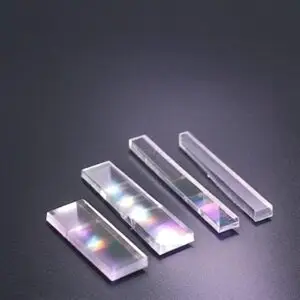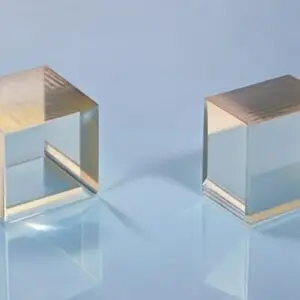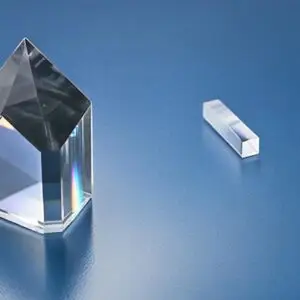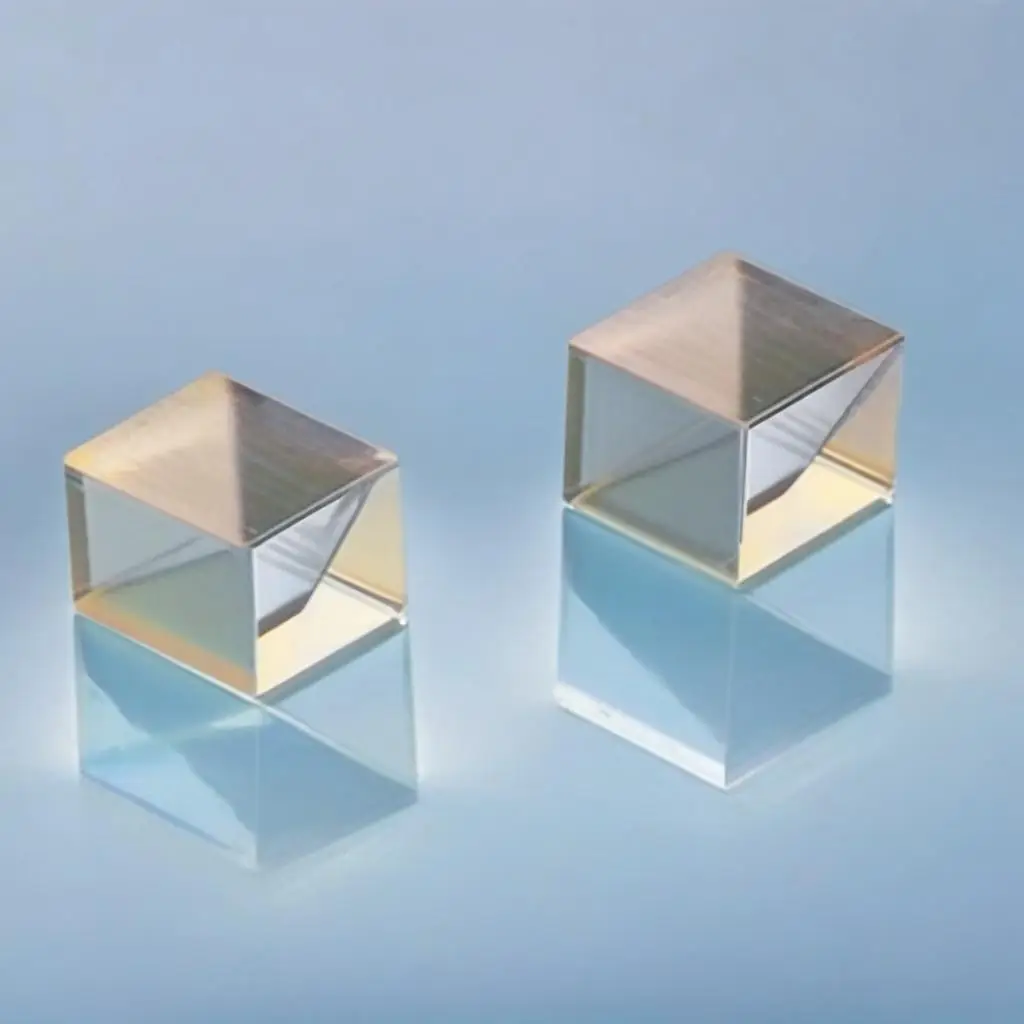
POC-OC-122460-Tm:YAP Crystal

  • High absorption efficiency for pump wavelengths near 795 nm.
  • Strong alignment with AlGaAs diode laser emissions.
  • Broader absorption bandwidth compared to Tm:YAG crystals.
  • Excellent thermal conductivity and mechanical durability.
  • Customizable crystals available upon request.

Customizable Components Available for This Material to Meet Your Specific Needs!

General Description

Tm:YAP (Thulium-doped Yttrium Aluminum Perovskite, Tm:YAlO₃) crystal is a significant advancement in 2 μm laser emission. Its physical and chemical properties are similar to Tm:YAG, but Tm:YAP offers enhanced absorption efficiency at 795 nm, aligning perfectly with the emission spectra of AlGaAs high-power laser diodes. This improved alignment makes Tm:YAP a highly efficient crystal for high-energy systems. Additionally, its broader absorption band, approximately 4 nm wider than Tm:YAG, delivers higher pumping efficiency and output stability. These properties make Tm:YAP crystals a prime choice for medical laser systems and military applications requiring superior performance and precision.

General Applications and Examples

  1. Medical Lasers:
    • Tm:YAP crystals are widely used in surgical laser systems due to their high absorption efficiency and precise energy emission.
    • They are used for minimally invasive procedures such as tissue ablation, vascular surgery, and laser lithotripsy.
    • Their reliability in medical environments ensures consistent output in laser-based diagnostic equipment.
  2. Military and Defense:
    • Tm:YAP is a reliable choice for military-grade laser targeting systems.
    • It provides enhanced beam quality for high-precision laser weaponry and defense applications.
    • Tm:YAP supports advanced thermal imaging and distance measurement for military-grade LiDAR systems.
  3. Industrial Applications:
    • The broad emission wavelength and energy storage make it ideal for material processing applications, including cutting, welding, and surface treatments.
    • Its mechanical and thermal durability enables its use in high-performance machining systems.
  4. Scientific Research:
    • The stability of Tm:YAP Crystal lasers makes them suitable for spectroscopy and advanced optical research in photonics.
    • They are used in femtosecond laser setups for generating short and high-intensity pulses.

Chemical and Structural Properties

PropertyValue
Chemical FormulaTm:YAlO₃
Dopant Concentration1.0–4.0 at%
Melting Point1870 °C
Density5.35 g/cm³
Mohs Hardness8.5
Thermal Conductivity11 W·m⁻¹·K⁻¹
Pump Absorption Peaks794.8 nm (a-axis), 793.5 nm (b-axis)
Emission Wavelength1.98 μm (a-axis, c-axis), 1.94 μm (b-axis)
Fluorescence Lifetime4.4–7.7 ms
Refractive Index1.91
Central Emission Peak1050 nm

Optical, Laser and Nonlinear Optical Properties

PropertyValue
Absorption Efficiency794–795 nm
Absorption BandwidthBroad (~4 nm wider than Tm:YAG)
Pumping Source CompatibilityAlGaAs diode lasers
Laser Emission Wavelength~2 μm (1.98 μm or 1.94 μm depending on axes)
PolarizationLinear
Thermal Lens CompensationNegative index shift offset by end-face bulging

Standard Fabrication Specifications

SpecificationValue
Orientationa-cut or c-cut
Length Tolerance±0.1 mm
Face Dimensions±0.01 mm
Parallelism Error<20 arcsec
Perpendicularity Error<10 arcmin
Surface Quality20–10 Scratch–Dig
Surface Flatnessλ/6 at 632.8 nm
Protective Chamfers<0.1 mm at 45°

Spectrum Transmission Curve

The Tm:YAP crystal exhibits strong absorption near 795 nm and emission peaks around 1.94 μm and 1.98 μm, making it an efficient medium for 2 μm lasers. If additional spectrum data is needed, POC can provide further details upon request.

Coating Specification

  • AR Coating: Anti-reflective coatings for optimized performance at 794 nm (pump wavelength) and 1.98 μm (laser wavelength).
  • Custom coatings are available based on specific operational requirements.
  • Adhesion Test: Compliant with MIL-C-675C military standards, an adhesion test involved applying a tape that meets LT-90 specifications onto the lens film layer. The tape was affixed fully and then removed vertically. This procedure was performed three times, resulting in no blistering or peeling.
  • Temperature Test: In line with MIL-C-675C specifications, test pieces were subjected to temperatures of -62±1℃ and 71±1℃. After maintaining them at room temperature (16℃~32℃) for two hours, the adhesion test was repeated, confirming no film detachment.
  • Abrasion Resistance Test: Conforming to MIL-C-675C and CCC-C-440 standards, the abrasion resistance test involved a gauze tester applying a minimum force of 1.0 lbs (0.45 kg) to the film. This was repeated 25 times with gauze widths of 1/4 inch (6.4mm) and 3/8 inch (9.5mm), ensuring no damage occurred to the film surface.
  • Humidity Test: Under MIL-C-675C criteria, the test piece was placed in a controlled temperature and humidity chamber set to 49 ±2℃ and 95%~100% humidity for 24 hours. The film remained intact, with no peeling, scratches, or other defects.
  • Solvent and Cleaning Testing: Following MIL-C-675C specifications, test pieces were exposed to room temperature conditions (16℃~32℃) and tested with acetone and alcohol for at least 10 minutes each. After air drying and subsequent cleaning with a cotton cloth soaked in alcohol, the film surface showed no signs of peeling or scratches.
  • Salt Spray Test: After 100 hours in a 35°C environment with a 5% saltwater concentration, the film showed no signs of damage.
Face DimensionsLengthDoping (%)CoatingsPrice (USD)
3 × 3 mm8 mm3%Uncoated540
3 × 3 mm8 mm3%AR@794 nm + 1800–1960 nm590
CustomizableCustomCustomCustom coatings availableRequest

//body code