POC-OC-122464-Terbium Gallium Garnet Crystal

  • High Verdet constant (35 Rad T^-1 m^-1) for excellent magneto-optical performance.
  • High thermal conductivity (7.4 W m^-1 K^-1), ensuring efficient heat dissipation.
  • Superior laser damage threshold (>1 GW/cm²) for high-power laser systems.
  • Low optical loss (<0.1%/cm), minimizing light absorption.
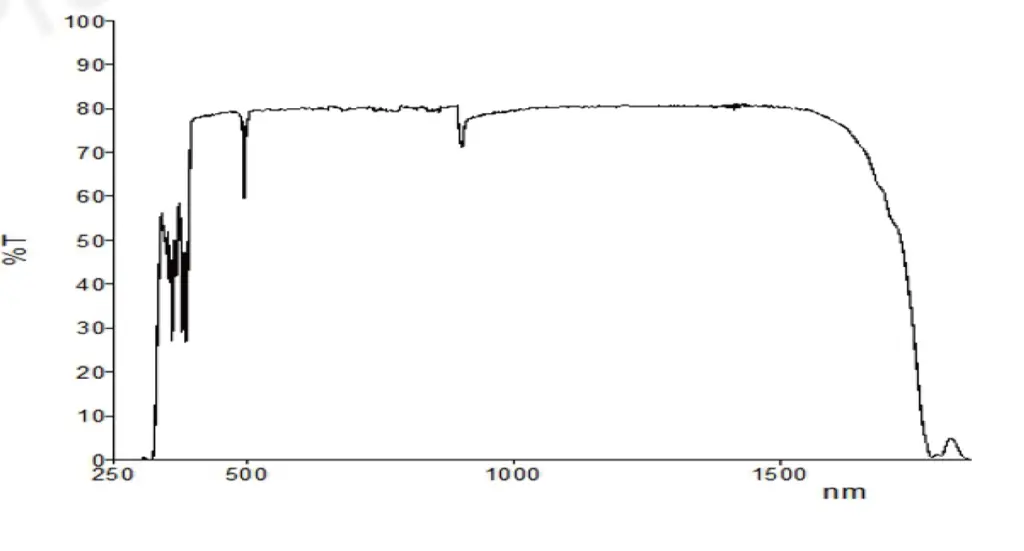
  • Broad application range from 400 nm to 1100 nm (excluding 475 nm–500 nm).

Customizable Components Available for This Material to Meet Your Specific Needs!

General Description

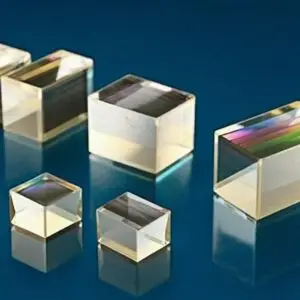
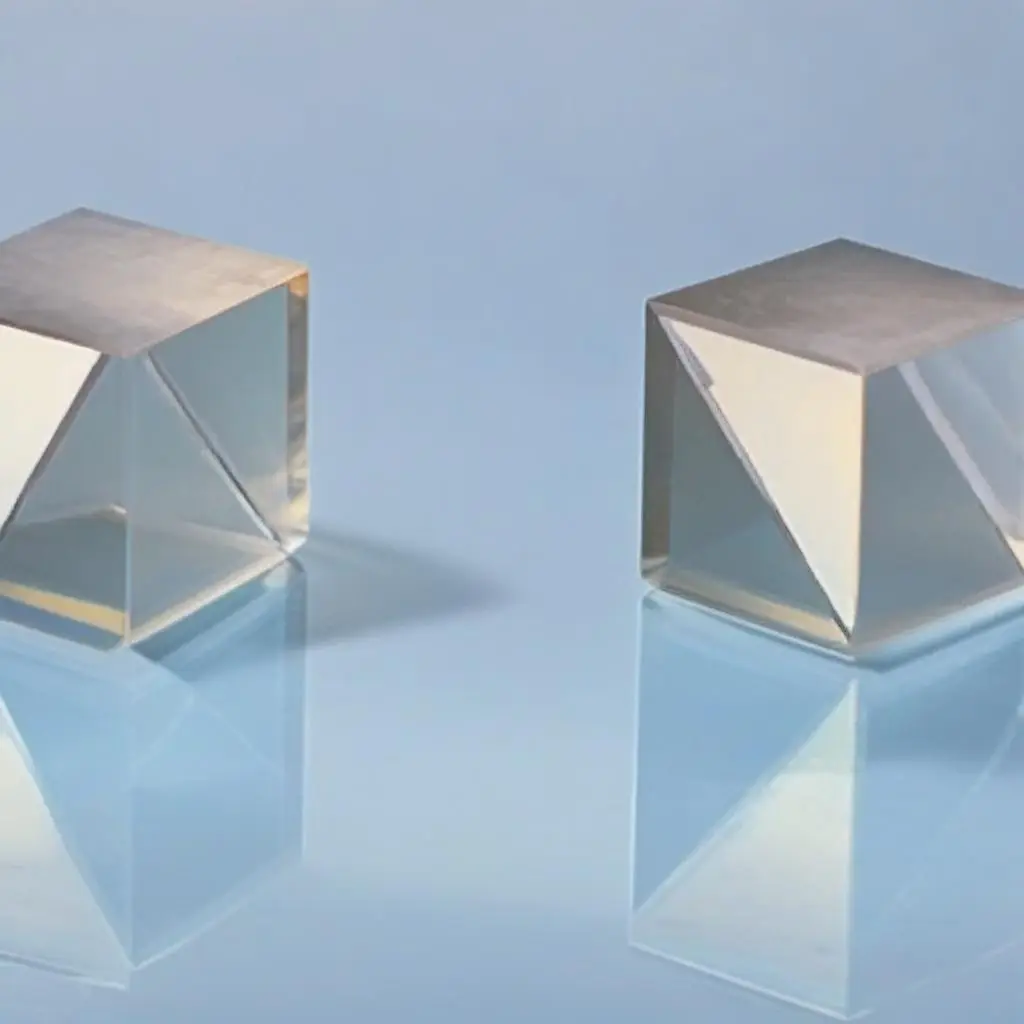
Terbium Gallium Garnet (TGG Crystal) is a high-performance magneto-optical crystal widely used in Faraday devices, including optical isolators and rotators. This cubic crystal system offers a unique combination of high thermal conductivity, low optical loss, and excellent Verdet constant, making it the material of choice for optical systems requiring high power and precision. TGG crystals are especially suitable for multi-stage laser amplification systems and ring-type laser cavities due to their robustness and optical clarity. With its high laser damage threshold, TGG ensures stable performance in demanding applications, including industrial and scientific laser systems.

General Applications

  1. Optical Isolators and Rotators
    TGG crystals are primarily used in Faraday isolators and rotators, essential for protecting laser systems by isolating back-reflected light. Their high Verdet constant enhances their efficiency in these devices.
  2. Laser Systems
    TGG is commonly used in high-power laser applications where thermal management and optical quality are crucial. Applications include YAG and Ti:Sapphire lasers in industrial cutting, welding, and research systems.
  3. Ring Laser Systems
    The low absorption and high thermal conductivity of TGG make it ideal for ring laser gyroscopes and amplifiers requiring stable and consistent performance over extended use.
  4. Environmental and Scientific Instruments
    TGG crystals are used in magneto-optical spectrometry and environmental monitoring systems to manipulate light polarization in highly accurate setups.

Chemical and Structural Properties

Property Value
Chemical Formula Tb3Ga5O12
Crystal Structure Cubic
Lattice Constant 12.355 Å
Density 7.13 g/cm³
Melting Point 1725°C
Mohs Hardness 8.0
Thermal Conductivity 7.4 W m^-1 K^-1
Laser Damage Threshold >1 GW/cm²
Refractive Index @1064 nm 1.954

Optical Properties

Property Value
Verdet Constant 35 Rad T^-1 m^-1
Wavelength Range 400 nm–1100 nm
Transmission Loss <0.1%/cm
Absorption Bandwidth Broad
Thermal Expansion Coefficient 7.4 × 10^-6 K^-1

Standard Fabrication Specifications

Specification Value
Orientation [111] within ±15′
Extinction Ratio >30 dB
Diameter Tolerance ±0.1 mm
Length Tolerance ±0.2 mm
Surface Quality (Scratch/Dig) 10/5 (MIL-PRF-13830B)
Flatness ≤λ/8 @ 633 nm
Wavefront Distortion ≤λ/8 @ 633 nm
Parallelism 20 arc sec
Perpendicularity 15 arc min
Chamfer 0.2 mm × 45°
AR Coating <0.2% @ 1064 nm

Spectrum Transmission Curve

POC-TGG Crystal Spectrum Transmission Curve

Coating Specification

  • Anti-Reflective (AR) coating options available for specific laser wavelengths.
  • Typical coatings include <0.2% reflectivity at 1064 nm.
  • Adhesion Test: Compliant with MIL-C-675C military standards, an adhesion test involved applying a tape that meets LT-90 specifications onto the lens film layer. The tape was affixed fully and then removed vertically. This procedure was performed three times, resulting in no blistering or peeling.
  • Temperature Test: In line with MIL-C-675C specifications, test pieces were subjected to temperatures of -62±1℃ and 71±1℃. After maintaining them at room temperature (16℃~32℃) for two hours, the adhesion test was repeated, confirming no film detachment.
  • Abrasion Resistance Test: Conforming to MIL-C-675C and CCC-C-440 standards, the abrasion resistance test involved a gauze tester applying a minimum force of 1.0 lbs (0.45 kg) to the film. This was repeated 25 times with gauze widths of 1/4 inch (6.4mm) and 3/8 inch (9.5mm), ensuring no damage occurred to the film surface.
  • Humidity Test: Under MIL-C-675C criteria, the test piece was placed in a controlled temperature and humidity chamber set to 49 ±2℃ and 95%~100% humidity for 24 hours. The film remained intact, with no peeling, scratches, or other defects.
  • Solvent and Cleaning Testing: Following MIL-C-675C specifications, test pieces were exposed to room temperature conditions (16℃~32℃) and tested with acetone and alcohol for at least 10 minutes each. After air drying and subsequent cleaning with a cotton cloth soaked in alcohol, the film surface showed no signs of peeling or scratches.
  • Salt Spray Test: After 100 hours in a 35°C environment with a 5% saltwater concentration, the film showed no signs of damage.
Face Dimensions (mm) Length (mm) Coatings Price (USD)
3 × 3 5 Uncoated 370
3 × 3 5 AR@1064 nm 435
Custom Size Custom Coating as required Request
//body code