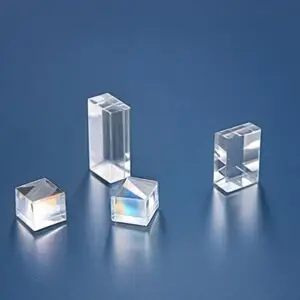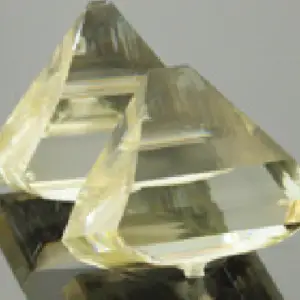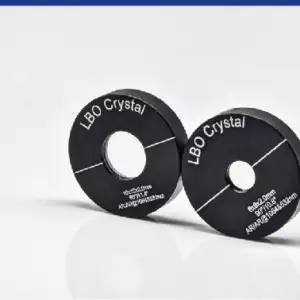
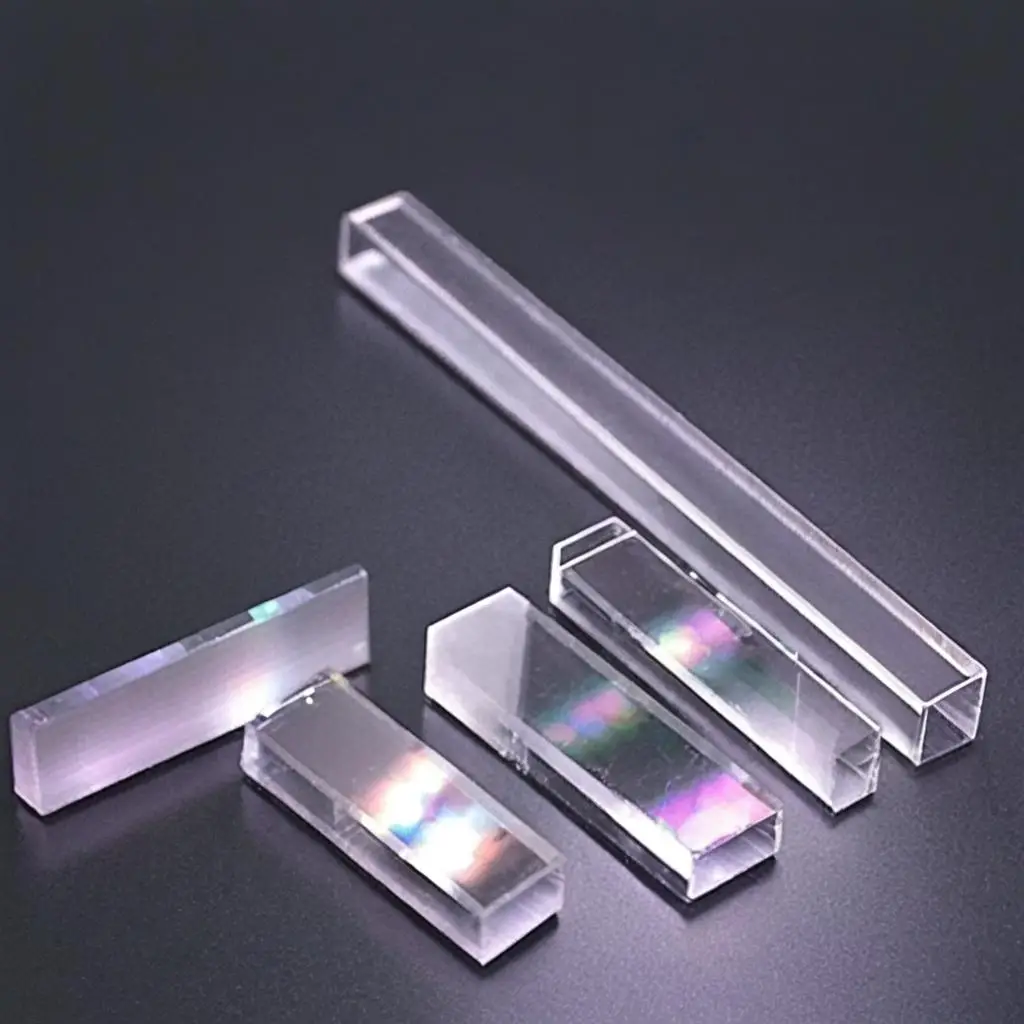
POC-OC-122423-PPLN Crystal

  • Wide Transparency Range: Covers a broad range from 0.4 μm to 4.5 μm, suitable for diverse applications.
  • High Nonlinear Efficiency: Optimized for quasi-phase-matching (QPM) processes with precision fabrication.
  • Customizable Poling Periods: Supports temperature-controlled QPM applications for enhanced wavelength flexibility.
  • Long Operational Lifespan: Durable material ideal for high-power and long-term applications.
  • Broad Application Range: Effective for optical parametric oscillation (OPO), second-harmonic generation (SHG), and sum-frequency generation (SFG).

Customizable Components Available for This Material to Meet Your Specific Needs!

General Description

Periodically Poled Lithium Niobate (PPLN) is a highly efficient nonlinear crystal designed for wavelength conversion processes. Its wide transparency range (0.4–4.5 μm) and high damage threshold make it suitable for demanding photonic applications. PPLN is fabricated with precision-controlled periodic domains, enabling quasi-phase matching (QPM) for nonlinear optical processes such as second-harmonic generation (SHG), sum-frequency generation (SFG), and optical parametric oscillation (OPO).

The use of PPLN in OPO applications facilitates wavelength tuning from 3 μm to 4.5 μm, providing exceptional efficiency and output power. With proper temperature control, PPLN crystals enable high-accuracy wavelength tuning and consistent performance, making them a popular choice in fields like quantum optics, spectroscopy, and medical imaging

General Applications and Examples

PPLN crystals are widely utilized in nonlinear optics due to their broad transparency range and efficient phase-matching properties. Key applications include:

  1. Second-Harmonic Generation (SHG):
    • Converts infrared laser light into visible or near-infrared wavelengths with high efficiency.
    • Example: PPLN is used in green laser systems for spectroscopy and biomedical imaging.
  2. Optical Parametric Oscillation (OPO):
    • Generates mid-infrared wavelengths (3 μm–4.5 μm) using a pump source at 1064 nm.
    • Example: Mid-infrared OPO systems based on PPLN are used in gas sensing and environmental monitoring.
  3. Difference Frequency Generation (DFG):
    • Combines 1064 nm and 775 nm pump sources to generate output in the 2400–3000 nm range.
    • Example: PPLN-based DFG is employed in advanced spectroscopy systems.
  4. Sum-Frequency Generation (SFG):
    • Combines 1550 nm and other wavelengths (e.g., 780 nm or 810 nm) to generate green laser light.
    • Example: SFG processes in PPLN crystals are used in biomedical imaging and optical coherence tomography (OCT).

Chemical and Structural Properties

PropertyValue
Chemical FormulaLiNbO3
Crystal StructureTrigonal
Transparency Range0.4 μm–4.5 μm
Nonlinear Coefficientd33 = 27 pm/V
Damage Threshold> 500 MW/cm² (at 1064 nm)
Poling Period4–200 μm (standard and custom)
Refractive Index (1064 nm)n_o = 2.23, n_e = 2.14
Thermal Conductivity~4.74 W/m·K

Optical and Nonlinear Optical Properties

PropertyValue
Nonlinear ProcessQuasi-Phase Matching (QPM)
Conversion EfficiencyUp to 50%
Phase Matching TypeType I and Type II
Coherence Length~30 μm
Effective Nonlinear Coefficient (deff)16 pm/V (QPM-enhanced)

Standard Fabrication Specifications

SpecificationValue
Dimensions0.5 × 5 × 20 mm (typical)
Poling Period6.8 μm (standard), customizable
Surface FlatnessLambda/6 @ 632.8 nm
Parallelism< 10 arc seconds
Perpendicularity< 10 arc minutes
Surface Quality10-5 Scratch-Dig

Spectrum Transmission Curve

The spectrum transmission range of PPLN crystals extends from 0.4 µm to 4.5 µm. This broad range enables compatibility with mid-IR and visible wavelength applications. Below is an approximation of transmission data derived from standard measurements:

  • Transmission Efficiency: >90% within the range of 0.5 µm to 4.2 µm.
  • Spectral Loss: Negligible in the 3–4 µm mid-IR range, with high consistency across wavelengths.

Coating Specification

  • Anti-Reflective (AR) Coating: R < 0.2% for specified wavelength
  • Customs Coatings: Availablle upon request
  • Adhesion Test: Compliant with MIL-C-675C military standards, an adhesion test involved applying a tape that meets LT-90 specifications onto the lens film layer. The tape was affixed fully and then removed vertically. This procedure was performed three times, resulting in no blistering or peeling.
  • Temperature Test: In line with MIL-C-675C specifications, test pieces were subjected to temperatures of -62±1℃ and 71±1℃. After maintaining them at room temperature (16℃~32℃) for two hours, the adhesion test was repeated, confirming no film detachment.
  • Abrasion Resistance Test: Conforming to MIL-C-675C and CCC-C-440 standards, the abrasion resistance test involved a gauze tester applying a minimum force of 1.0 lbs (0.45 kg) to the film. This was repeated 25 times with gauze widths of 1/4 inch (6.4mm) and 3/8 inch (9.5mm), ensuring no damage occurred to the film surface.
  • Humidity Test: Under MIL-C-675C criteria, the test piece was placed in a controlled temperature and humidity chamber set to 49 ±2℃ and 95%~100% humidity for 24 hours. The film remained intact, with no peeling, scratches, or other defects.
  • Solvent and Cleaning Testing: Following MIL-C-675C specifications, test pieces were exposed to room temperature conditions (16℃~32℃) and tested with acetone and alcohol for at least 10 minutes each. After air drying and subsequent cleaning with a cotton cloth soaked in alcohol, the film surface showed no signs of peeling or scratches.
  • Salt Spray Test: After 100 hours in a 35°C environment with a 5% saltwater concentration, the film showed no signs of damage.
Product CodeDimensions (mm)Poling Period (μm)Price (USD)
PPLN-010.5 × 5 × 206.8500
PPLN-021 × 10 × 404.5750
Custom-PPLNCustomizableCustomizableRequest Quote
//body code