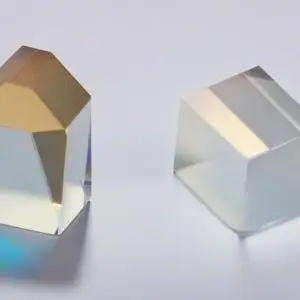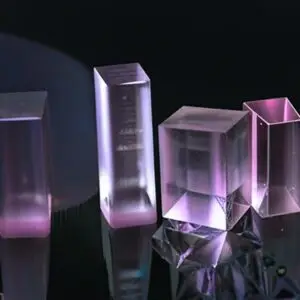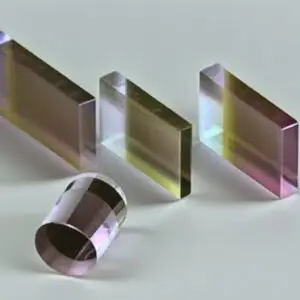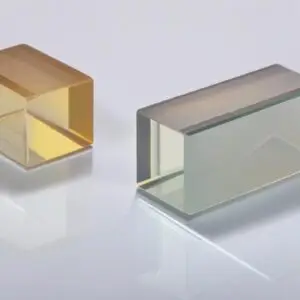
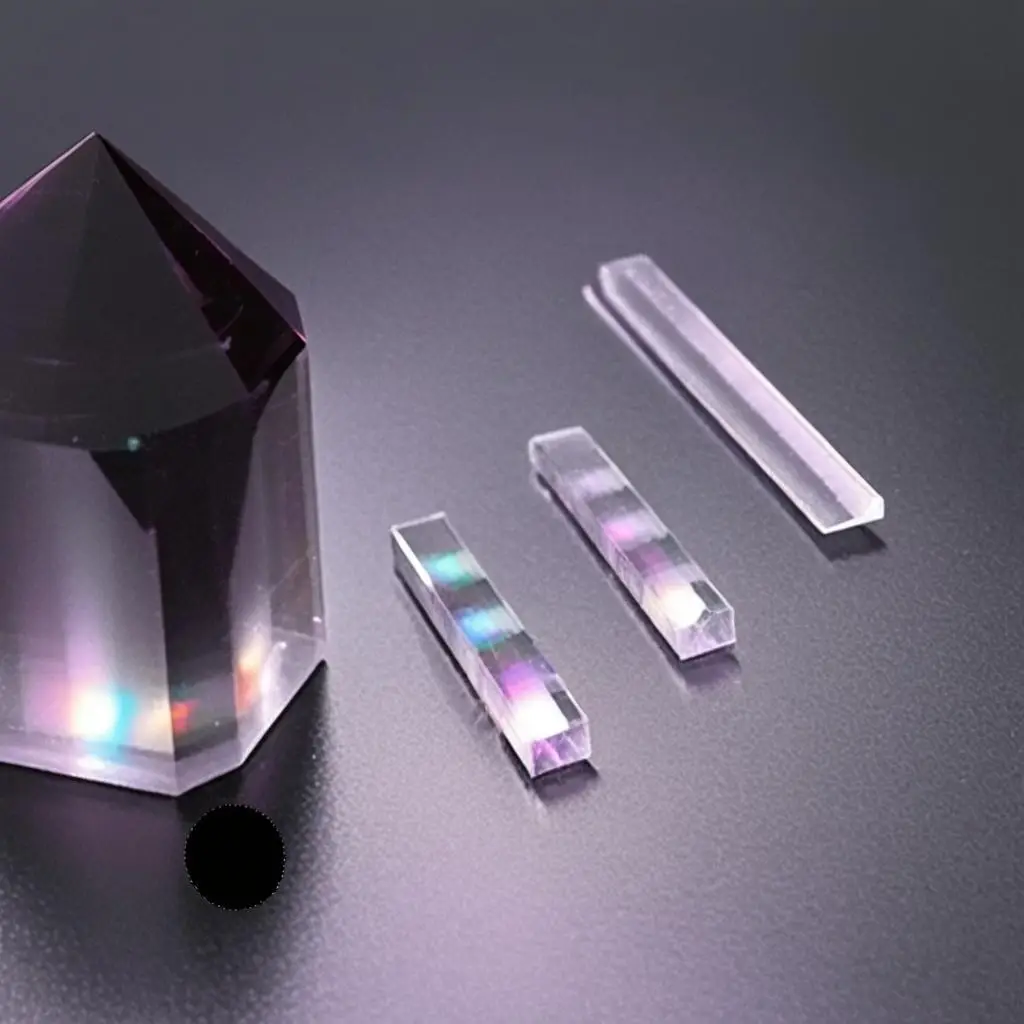
Co²⁺:MgAl₂O₄ Crystal, also known as Cobalt-doped Magnesium Aluminate Spinel Crystal, is a state-of-the-art passive Q-switch material. It is particularly effective in laser systems operating in the 1.2–1.6 µm spectral range, with peak performance in eye-safe lasers at 1.54 µm. The crystal features a cubic structure and substitutes cobalt ions for magnesium, offering a homogeneous doping profile. This results in uniform absorption properties that enhance laser performance without requiring additional corrective elements. Its high hardness and thermal stability make it suitable for high-power laser systems.
The negligible excited-state absorption of Cobalt-doped Magnesium Aluminate Spinel Crystal allows for a high contrast ratio in Q-switch operations. This crystal is particularly advantageous for erbium-doped lasers, facilitating compact and efficient passive Q-switching in both flash-lamp and diode-pumped systems. With high thermal conductivity and excellent mechanical strength, this crystal is ideal for demanding environments.
Co2+:MgAl2O4 Crystal is widely used in:
Example: Cobalt-doped Magnesium Aluminate Spinel is commonly integrated into erbium glass laser systems for robust and high-contrast Q-switching with long operational lifetimes, even under high thermal loads.
| Attribute | Value |
|---|---|
| Chemical Formula | Co²⁺:MgAl₂O₄ |
| Crystal Structure | Cubic |
| Lattice Constant | 8.07 Å |
| Density | 3.62 g/cm³ |
| Melting Point | 2105 °C |
| Reflective Index | n = 1.6948 @ 1.54 µm |
| Stimulated Emission Cross-Section | 0.033 W |
| Specific Heat Capacity | 1.046 J/g·K |
| Thermal Expansion Coefficient | 5.9 × 10⁻⁶ K⁻¹ @ 25 °C |
| Mohs Hardness | 8.2 |
| Extinction Ratio | 25 dB |
| Lattice Orientation | [100] or [111] ± 0.5° |
| Optical Density | 0.1–0.9 |
| Damage Threshold | >500 MW/cm² |
| Co Doping Concentration | 0.01–0.3 atm% |
| Parameter | Value |
|---|---|
| Transparency Range | 1.2–1.6 µm |
| Peak Performance Wavelength | 1.54 µm |
| Absorption Cross-Section | 3.5 × 10⁻¹⁹ cm² |
| Excited-State Absorption | Negligible |
| Thermal Conductivity | 17 W/m·K |
| Laser Damage Threshold | >500 MW/cm² |
| Specification | Value |
|---|---|
| Surface Flatness | λ/8 @ 632.8 nm |
| Parallelism | <10 arcmin |
| Perpendicularity Error | <0.1 mm at 45° |
| Surface Quality | 10-5 S-D |
| Damage Threshold | >500 MW/cm² |
| Dimensions | Customizable |
The spectrum curve for Co²⁺:MgAl₂O₄ shows high absorption cross-section around 1.54 µm, with minimal excited-state absorption across the transparency range (1.2–1.6 µm). This ensures a high Q-switch contrast ratio and efficient laser operation.
| Face Dimensions | Initial Transmission | Coatings | Price (USD) |
|---|---|---|---|
| 3 × 3 mm | 85% @ 1.54 µm | AR @ 1.54 µm | 400 |
| 5 × 5 mm | 95% @ 1.54 µm | AR @ 1.54 µm | 500 |
| Customizable | As per request | As per request | On inquiry |