

Key Features
- Exceptional Thermal Stability: These crystals exhibit near-zero thermal expansion, ensuring stability in extreme temperature conditions.
- Precision-Grade Optical and Mechanical Properties: Suitable for high-performance applications such as metrology and astronomy.
- Versatility in Industrial and Scientific Applications: Processed by POC for a wide range of advanced uses.
- Customizable Fabrication: POC supports tailored dimensions and coatings for specific industrial requirements.
- High Chemical and Mechanical Resistance: Ideal for use in challenging operational environments.
General Description
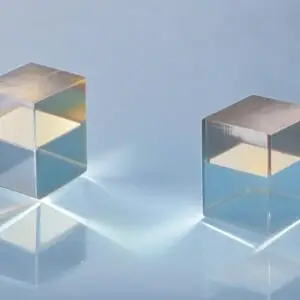
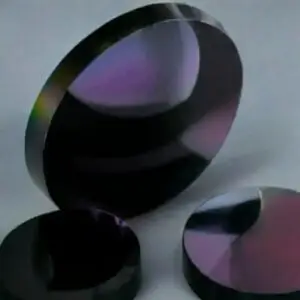
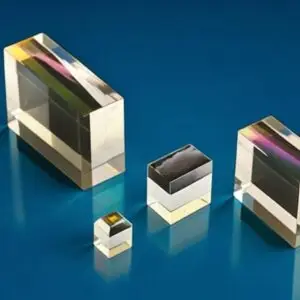
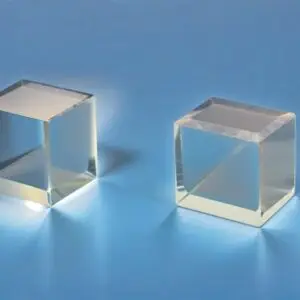
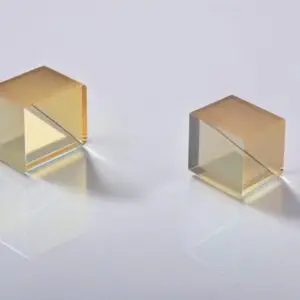
Athermal crystals, including Zerodur Glass and Ohara Cearceram-Z Glass, are glass-ceramic materials renowned for their near-zero thermal expansion and dimensional stability. These materials are crucial in precision optics, industrial metrology, and scientific research. Zerodur Glass was originally developed for applications in space telescopes and lithography, while Ohara Cearceram-Z Glass complements similar applications with exceptional optical clarity and homogeneity.
At POC, these materials undergo expert processing and customization to meet diverse client needs. Their ability to maintain mechanical and optical performance under significant thermal and environmental stress makes them indispensable in high-precision applications.
General Applications and Examples
- Astronomy and Space Optics:
- Zerodur and Cearceram-Z Glass are widely used in the construction of telescope mirrors and optical substrates, ensuring minimal distortion across temperature fluctuations.
- Semiconductor and Lithography Tools:
- Athermal crystals serve as substrates in photolithography, enabling nanoscale precision in semiconductor manufacturing.
- Precision Metrology:
- Dimensional stability makes them ideal for interferometers and high-precision measurement instruments.
- Scientific Research Instruments:
- They are utilized in advanced setups, such as spectrometers and high-performance optics.
- Industrial Optics:
- Custom lenses, beam splitters, and windows for high-performance laser systems and imaging devices.
Comparison Table (Zerodur vs. Cearceram-Z)
| Property | Zerodur Glass | Ohara Cearceram-Z Glass |
|---|---|---|
| Thermal Expansion (10^-6/K) | ~0.02 | ~0.02 |
| Density (g/cm³) | 2.53 | ~2.5 |
| Young’s Modulus (GPa) | 90 | 90 |
| Refractive Index (550 nm) | ~1.54 | ~1.54 |
| Transparency Range (µm) | 0.3–2.5 | 0.3–2.5 |
| Hardness (Knoop) | 650 | ~650 |
| Max Dimensions (mm) | 1000 (customizable) | 800 (customizable) |
Standard Fabrication Specifications
| Specification | Value |
|---|---|
| Dimensional Tolerance | ±0.02 mm |
| Surface Flatness | λ/10 @ 632.8 nm |
| Parallelism | <5 arcseconds |
| Scratch-Dig Quality | 10-5 |
| Maximum Size | Up to 1000 mm (customizable) |
| Coating Options | Anti-reflective, metallic |
Standard Products
| Product | Dimensions (mm) | Surface Flatness | Price (USD) |
|---|---|---|---|
| Zerodur Optical Substrate | 100 × 100 × 20 | λ/10 | $2,000–$4,000 |
| Cearceram-Z Prism | 50 × 50 × 10 | λ/8 | $1,500–$3,000 |
| Custom Specifications | Upon Request | Tailored | Contact for Quote |