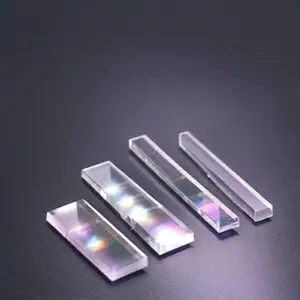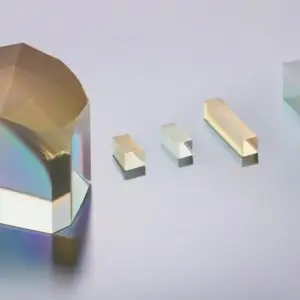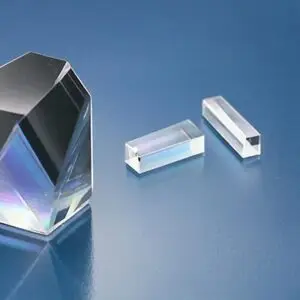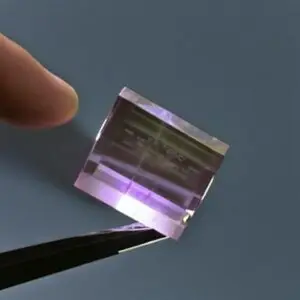
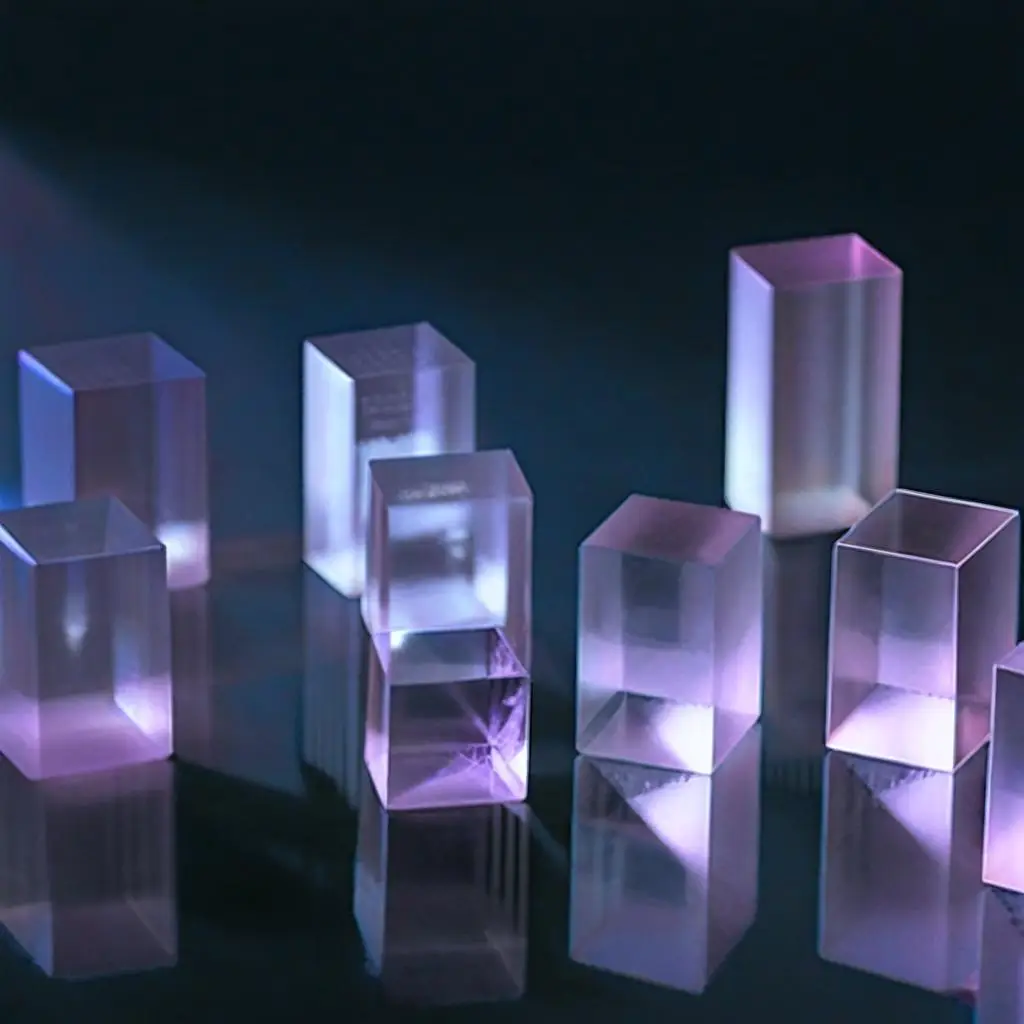
Tm:YLF (Thulium-doped Lithium Yttrium Fluoride) crystal is an advanced laser medium featuring high absorption peaks around 792 nm, making it ideal for laser diode pumping. Its unique cross-relaxation process doubles the number of ions in the upper laser level, enhancing the efficiency of each pump photon. Tm:YLF crystals are widely used as a pump source for Ho:YAG lasers due to the good overlap of their emission and absorption spectra. Additionally, the thermal refractive index of Tm:YLF decreases with temperature, leading to a negative thermal lens effect, which, when combined with end-face bulging compensation, ensures excellent beam stability and performance. This crystal’s superior polarization purity and stable operation make it ideal for high-precision applications.
Tm:YLF crystals are used in a variety of applications, including:
By leveraging Tm:YLF Crystal unique properties, these applications achieve high power output, precise targeting, and low thermal distortion, making this crystal indispensable in cutting-edge laser systems.
| Property | Specification |
|---|---|
| Orientation | c-cut |
| Clear Aperture | >90% |
| Face Dimensions Tolerance | ±0.1 mm |
| Length Tolerance | ±0.1 mm |
| Parallelism Error | <20 arcsec |
| Perpendicularity Error | <10 arcmin |
| Protective Chamfers | <0.1 mm at 45° |
| Surface Quality | 20-10 S-D |
| Surface Flatness | λ/10 @ 632.8 nm |
| Crystal Structure | Tetragonal |
| Density | 3.99 g/cm³ |
| Thermal Conductivity | 6 W/m·K |
| Mohs Hardness | 5 |
| dn/dT | -4.6 x 10^-6 (°C)^-1 |
| Typical Doping Level | 2-4 at.% |
| Optical Property | Specification |
|---|---|
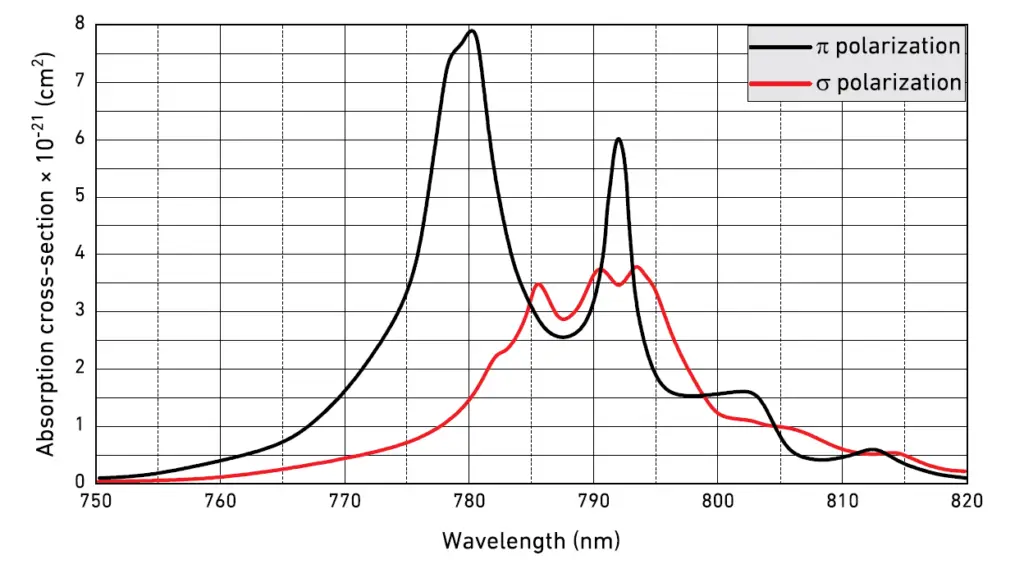
| Absorption Peak Wavelength | 792 nm |
| Absorption Cross-Section at Peak | 0.55 x 10^-19 cm² |
| Absorption Bandwidth at Peak | ~5 nm |
| Laser Wavelength | 1900 nm |
| Lifetime of Tm³⁺ Energy Level | 16 ms |
| Emission Cross-Section @ 1900 nm | 0.4 x 10^-19 cm² |
| Refractive Index @ 1064 nm | nₒ = 1.448, nₑ = 1.446 |
| Specification | Value |
|---|---|
| Orientation | c-cut |
| Face Dimensions Tolerance | ±0.1 mm |
| Surface Quality | 20-10 S-D |
| Surface Flatness | λ/10 @ 632.8 nm |
| Parallelism Error | <20 arcsec |
| Protective Chamfers | <0.1 mm at 45° |
| Laser-Induced Damage Threshold (LIDT) | >10 J/cm² @ 1900 nm, 10 ns |
Absorption and emission spectra have been optimized for diode pumping at 792 nm and laser output at 1900 nm. This data is critical for system design and alignment.
| Face Dimensions | Length | End Faces | Doping | Coatings | Price (USD) |
|---|---|---|---|---|---|
| 3 x 3 mm | 8 mm | Brewster-angle cut | 3% | Uncoated | 540 |
| 3 x 3 mm | 8 mm | Right-angle cut | 3% | AR@792 nm + 1800-1960 nm | 590 |
| Custom Size | Custom | Upon Request | Custom | Upon Request | Custom Pricing |