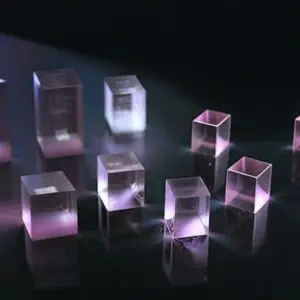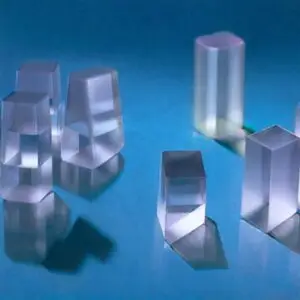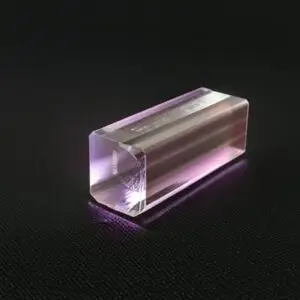
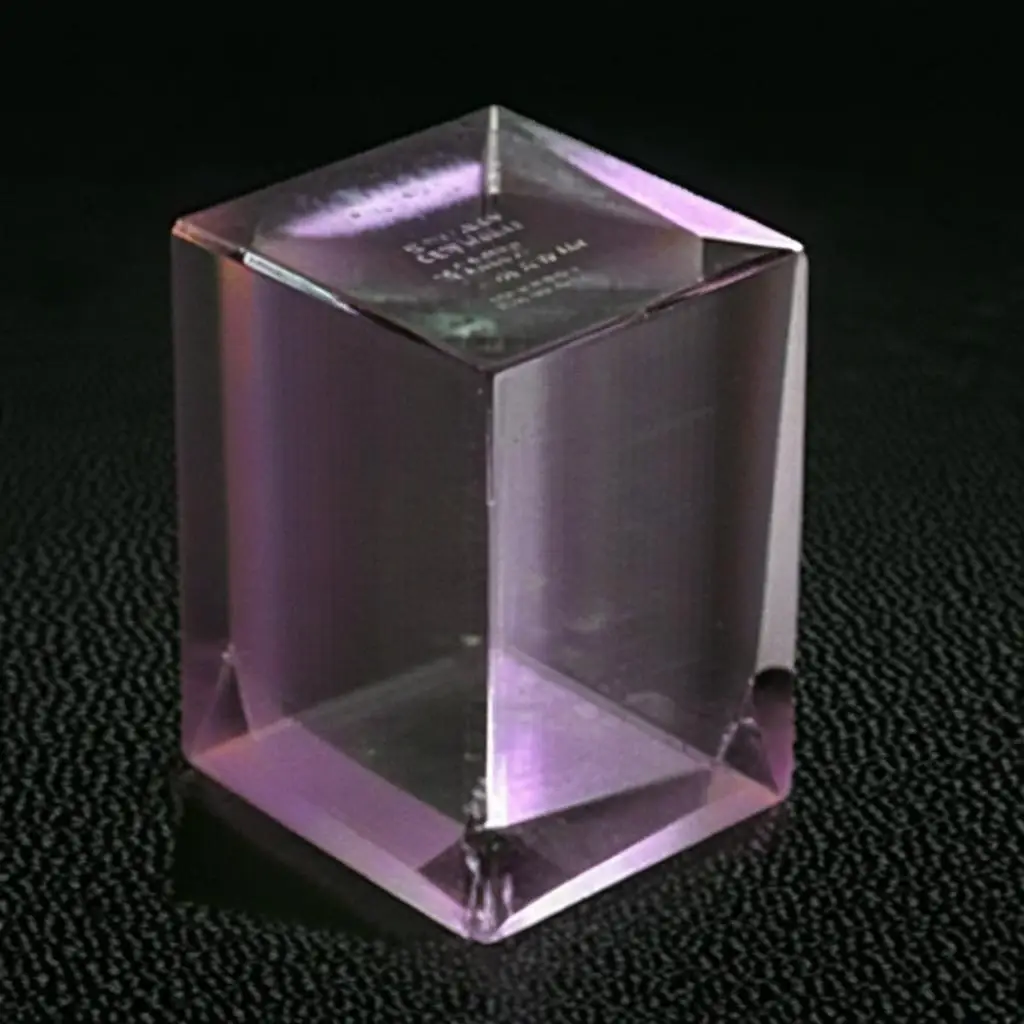
POC-OC-122481-Cr²⁺/ZnS Crystal

  • Broad tunability across the entire mid-IR spectrum (1.5–4.0 µm).
  • High absorption and emission cross-sections for efficient laser output.
  • Excellent mechanical strength and durability for long-term use.
  • Low thermal lensing effect, ensuring high laser stability.
  • Ideal material for mid-IR laser systems and medical applications.

Customizable Components Available for This Material to Meet Your Specific Needs!

General Description

Cr²⁺/ZnS crystals are doped zinc sulfide crystals that exhibit exceptional optical and physical properties, making them a preferred choice for mid-infrared (mid-IR) laser applications. These crystals have a broad emission spectrum and high thermal stability, allowing for tunable laser output between 1.5 and 4.0 µm. Cr²⁺ ions embedded in the ZnS crystal lattice provide strong absorption and emission properties that are critical for solid-state laser systems. This material is highly durable, with excellent resistance to environmental degradation and thermal fluctuations. Additionally, Cr²⁺/ZnS crystals are suitable for pumping by widely available diode and solid-state lasers, enhancing their versatility in advanced photonics applications.

General Applications and Examples

  1. Mid-IR Tunable Laser Systems:
    Cr²⁺/ZnS crystals are extensively utilized in mid-infrared laser systems due to their wide tunable range of 1.5–4.0 µm. These lasers find applications in medical diagnostics, chemical sensing, and environmental monitoring.
  2. Medical Applications:
    The unique optical properties of Cr²⁺/ZnS crystals make them suitable for tissue ablation, laser surgery, and dermatology, particularly in the mid-infrared spectrum where water absorption is optimal for soft tissues.
  3. OPO Applications (Optical Parametric Oscillators):
    Cr²⁺/ZnS crystals serve as the gain medium for mid-infrared OPO systems used in spectroscopy, remote sensing, and laser-induced fluorescence.
  4. Industrial Uses:
    These crystals are employed in materials processing applications such as precision cutting and marking, where mid-IR lasers provide a high degree of control and efficiency.
  5. Research Applications:
    Cr²⁺/ZnS crystals are widely used in laser research to develop advanced mid-IR laser systems and test novel laser pumping configurations.

Chemical and Structural Properties

Property Value
Chemical Formula ZnS with Cr²⁺ doping
Density 4.09 g/cm³
Thermal Conductivity ~27 W·m⁻¹·K⁻¹
Melting Point ~1700°C
Hardness ~3.5 (Moh’s scale)
Crystal Structure Cubic
Refractive Index ~2.3
Orientation <111>, <110>, <100>
Cleavage Plane <111>

Optical Properties

Property Value
Transparency Range 0.4–12 µm
Emission Wavelength Range 1.5–4.0 µm
Absorption Cross-Section High
Emission Cross-Section High
Pump Wavelength Range ~0.9–1.2 µm
Laser Damage Threshold >500 MW/cm²

Standard Fabrication Specifications

Specification Value
Dimensional Tolerance ±0.05 mm
Surface Quality 40-20 (scratch-dig rating)
Surface Flatness λ/8 @ 632.8 nm
Parallelism <30 arcsec
Bevel <0.25 × 45°
Diameter Range Up to 100 mm
Thickness Range 1–10 mm

Spectrum Transmission Curve

The transmission spectrum of Cr²⁺/ZnS crystal spans a wide range, with high transparency from 0.4 to 12 µm. The transmission curves highlight efficient light propagation in the mid-infrared region, making it ideal for IR lasers. Graphical representations of the spectrum are available on request.

Coating Specification

  • Anti-Reflection Coating: Optimized for 1.5–4.0 µm with a reflectance of <0.5%.
  • Durability Coatings: Enhance resistance to environmental damage and mechanical wear.
  • Custom Coatings: Available on request for specific wavelength ranges or applications.
  • Adhesion Test: Compliant with MIL-C-675C military standards, an adhesion test involved applying a tape that meets LT-90 specifications onto the lens film layer. The tape was affixed fully and then removed vertically. This procedure was performed three times, resulting in no blistering or peeling.
  • Temperature Test: In line with MIL-C-675C specifications, test pieces were subjected to temperatures of -62±1℃ and 71±1℃. After maintaining them at room temperature (16℃~32℃) for two hours, the adhesion test was repeated, confirming no film detachment.
  • Abrasion Resistance Test: Conforming to MIL-C-675C and CCC-C-440 standards, the abrasion resistance test involved a gauze tester applying a minimum force of 1.0 lbs (0.45 kg) to the film. This was repeated 25 times with gauze widths of 1/4 inch (6.4mm) and 3/8 inch (9.5mm), ensuring no damage occurred to the film surface.
  • Humidity Test: Under MIL-C-675C criteria, the test piece was placed in a controlled temperature and humidity chamber set to 49 ±2℃ and 95%~100% humidity for 24 hours. The film remained intact, with no peeling, scratches, or other defects.
  • Solvent and Cleaning Testing: Following MIL-C-675C specifications, test pieces were exposed to room temperature conditions (16℃~32℃) and tested with acetone and alcohol for at least 10 minutes each. After air drying and subsequent cleaning with a cotton cloth soaked in alcohol, the film surface showed no signs of peeling or scratches.
  • Salt Spray Test: After 100 hours in a 35°C environment with a 5% saltwater concentration, the film showed no signs of damage.
Product Dimensions Price (USD)
Cr²⁺/ZnS Laser Rods 10–50 mm length $1,000–$5,000
Cr²⁺/ZnS Windows 20–100 mm diameter $1,500–$8,000
Cr²⁺/ZnS Gain Mediums Custom dimensions $3,000–$15,000
Customization Options Available on request Contact for quote
//body code